A study of 120 poor decisions, hidden weaknesses, and recoverable mistakes made by real people in the Bible — and what we can learn from each one.

A study of 120 poor decisions, hidden weaknesses, and recoverable mistakes made by real people in the Bible — and what we can learn from each one.


Part 1: Pride and Arrogance 12 lessons
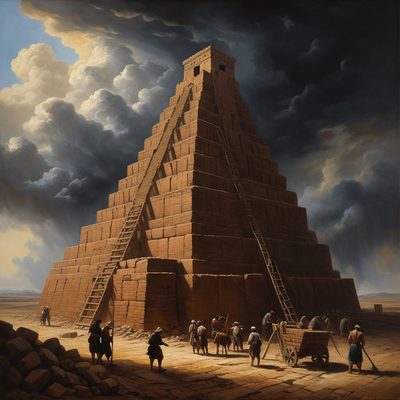
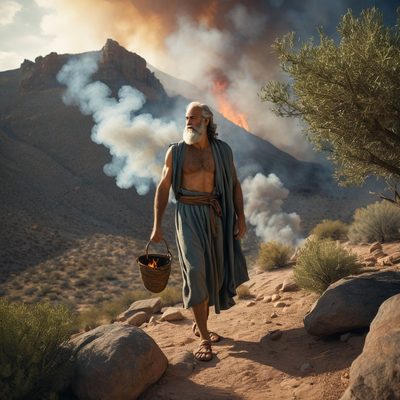
The Tower of Babel — Building for the Wrong Reason illustration

1. The Tower of Babel — Building for the Wrong Reason

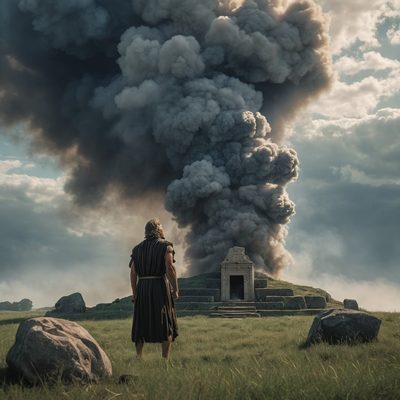
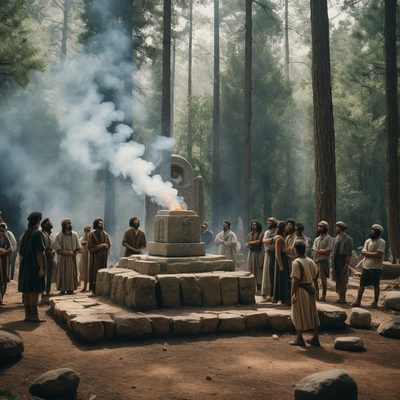
After the flood, humanity gathered in the plain of Shinar with one language and one goal: build a tower tall enough to reach heaven and "make a name for ourselves." The project was not driven by need or worship but by a desire for reputation and self-sufficiency. God confused their languages and scattered them before the project could be completed.

Scripture: Genesis 11:1–9

Lesson: Ambition is not the problem — the motivation behind it is. Projects launched primarily to make us look impressive tend to collapse under their own weight. Ask yourself honestly: is this for God's glory or my own reputation? Work done to "make a name for yourself" rarely produces what you imagined.

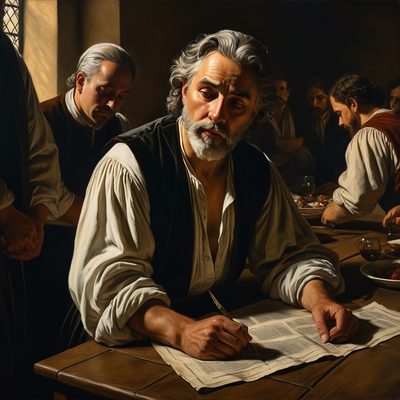
Uzziah Enters the Temple — A Leader Who Forgot His Limits illustration

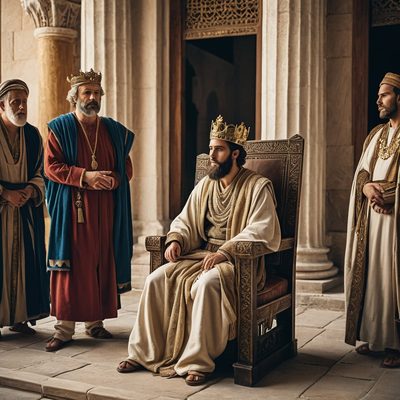
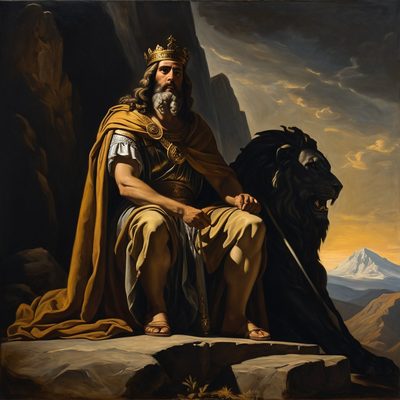
2. Uzziah Enters the Temple — A Leader Who Forgot His Limits

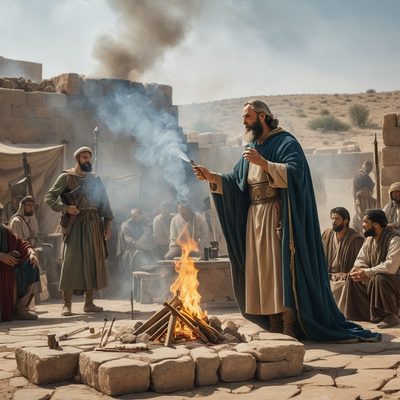
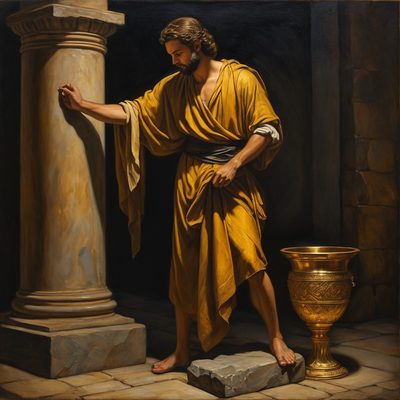
King Uzziah was one of Judah's most successful kings. He rebuilt towns, developed agriculture, trained a powerful army, and was celebrated across the region. Then, at the height of his success, he walked into the temple to burn incense — a role reserved for priests alone. When the priests confronted him, he became furious. Immediately leprosy broke out on his forehead, and he spent the rest of his life in isolation.

Scripture: 2 Chronicles 26:16–21

Lesson: Success is one of the most dangerous spiritual conditions a person can be in. The verse says explicitly, "after Uzziah became powerful, his pride led to his downfall." His greatest enemy was not an army — it was his own record of success. Long periods of success can make us feel we are above the rules that apply to everyone else.

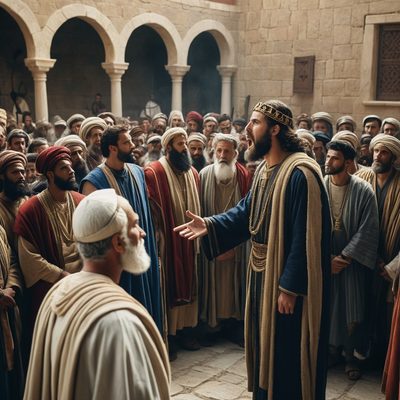
Rehoboam Rejects the Elders' Counsel illustration

3. Rehoboam Rejects the Elders' Counsel

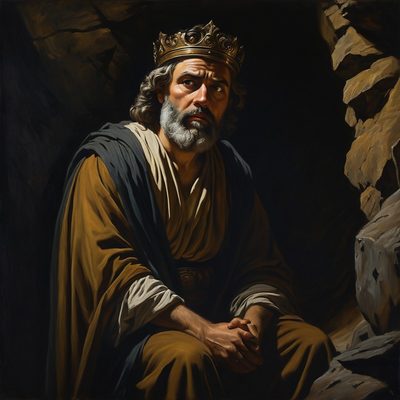
When Solomon died, his son Rehoboam faced a choice. The people came to him with a simple request: lighten the crushing burden of labor his father had placed on them, and they would serve him loyally. Rehoboam consulted the older advisors who said to listen to the people. Then he consulted his young friends who told him to be even harder than his father. He chose the young friends. Ten tribes immediately rebelled and the kingdom split permanently.

Scripture: 1 Kings 12:1–19

Lesson: The people whose advice you most enjoy hearing are often the people least qualified to give it. Friends who tell you what you want to hear feel good in the moment but cost you dearly over time. Seek people who have paid for their wisdom with experience, not just people who share your instincts.

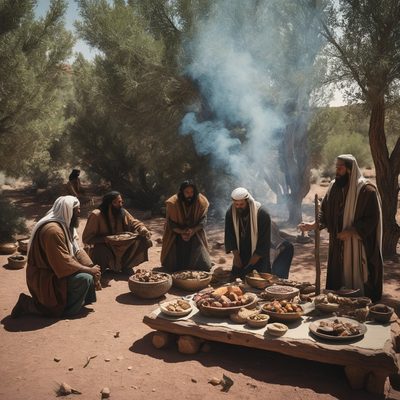
Hezekiah Shows His Treasures to Babylon illustration

4. Hezekiah Shows His Treasures to Babylon

King Hezekiah received visitors from Babylon — they came, he said, to ask about the miraculous sign God had given him. But rather than pointing to God's faithfulness, Hezekiah gave them a full tour of his treasury: gold, silver, spices, oils, weapons — everything. The prophet Isaiah told him the entire treasury would one day be carried to Babylon. Hezekiah's response was essentially, "Well, at least it won't happen in my lifetime."

Scripture: 2 Kings 20:12–19; Isaiah 39

Lesson: There is a particular kind of pride that shows off what it has been given, forgetting Who gave it. Hezekiah had just been miraculously healed, but he used the attention to display wealth rather than witness to God. When God does something remarkable in your life, the temptation is to make the story about yourself.

Miriam Criticizes Moses illustration

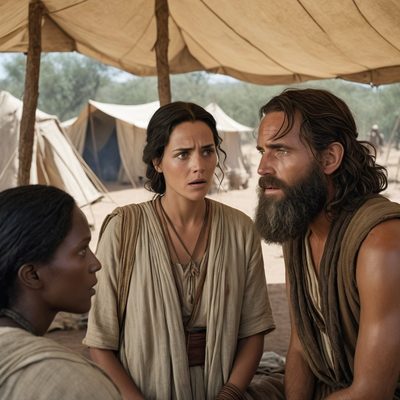
5. Miriam Criticizes Moses

Miriam and Aaron — Moses's own sister and brother — began speaking against him, using his Cushite wife as the stated reason. But the real issue was revealed quickly: "Has the Lord spoken only through Moses? Has he not spoken through us also?" They wanted equal authority. God was not pleased. He called all three to the tent of meeting, defended Moses directly, and Miriam was struck with leprosy for seven days.

Scripture: Numbers 12:1–15

Lesson: Criticism dressed as concern is still criticism. Miriam used the wife issue as the entry point, but the real grievance was about status and influence. When we find ourselves criticizing a leader and the real emotion underneath is "I deserve more recognition," the criticism rarely produces anything good.

Absalom Crowns Himself King illustration

6. Absalom Crowns Himself King

Absalom was David's son, gifted with extraordinary appearance and natural charisma. For four years he systematically stole the hearts of the people of Israel by positioning himself at the city gate, listening to disputes, and implying he would handle things better than his father. He built a following, declared himself king, and launched a rebellion that forced David to flee Jerusalem in tears.

Scripture: 2 Samuel 15:1–14

Lesson: Absalom's method is still used today: position yourself near people with problems, make them feel heard, imply that you would do better, and accumulate influence. It works — until it doesn't. Influence built by diminishing someone else rests on a foundation that cannot hold. Absalom died hanging by his own hair in a tree.

Solomon Accumulates Horses, Gold, and Wives illustration

7. Solomon Accumulates Horses, Gold, and Wives

<strong><a class="bible-ref" href="https://biblehub.com/deuteronomy/17.htm" target="_blank" data-verse="deuteronomy 17" data-display="Deuteronomy 17" data-translation="web" data-chapter-only="true">Deuteronomy 17</a></strong> specifically warned Israel's future kings: do not acquire great numbers of horses, do not accumulate large amounts of silver and gold, and do not take many wives. Solomon violated all three with breathtaking thoroughness. He had 700 wives and 300 concubines, amassed gold to an absurd degree, and imported horses from Egypt. The text in Deuteronomy was clear about why: it would turn his heart away. It did.

Scripture: 1 Kings 10:14–11:3; Deuteronomy 17:16–17

Lesson: God's warnings are not arbitrary restrictions — they are descriptions of how spiritual failure actually happens. Solomon did not wake up one day and decide to worship idols. He accumulated things that slowly redirected his heart. The "small" compromises we make for comfort or status are rarely small.

The Pharisee Who Prayed About Himself illustration

8. The Pharisee Who Prayed About Himself

Jesus told a parable about two men who went to the temple to pray. The Pharisee stood and prayed this: "God, I thank you that I am not like other people — robbers, evildoers, adulterers — or even like this tax collector. I fast twice a week and give a tenth of all I get." The tax collector stood at a distance, beat his breast, and said only, "God, have mercy on me, a sinner." Jesus said the second man went home justified, not the first.

Scripture: Luke 18:9–14

Lesson: The Pharisee's prayer was technically accurate — he probably did fast and tithe. But prayer that is mostly a list of one's own achievements is not really talking to God; it is performing for an audience that may not be there. When our religious practices make us feel superior to others, they are doing the opposite of what they were designed to do.

James and John Request the Best Seats illustration

9. James and John Request the Best Seats

James and John came to Jesus privately — without the other disciples knowing — and asked him to guarantee that they would sit at his right and left hand in the kingdom. When the other ten heard about the request, they were furious. Jesus used the moment to redefine greatness entirely: in the kingdom, the greatest is the servant of all.

Scripture: Mark 10:35–45

Lesson: The desire to secure a better position before others do is almost universal. James and John went to Jesus privately because they knew the request would not be popular. We do the same thing — seeking recognition, making sure we are noticed, privately hoping for advancement. Jesus's response did not condemn the ambition but redirected it entirely.

The Disciples Argue Over Who Is Greatest illustration

10. The Disciples Argue Over Who Is Greatest

While traveling to Capernaum, the disciples fell into an argument about which of them was the greatest. When Jesus asked what they had been discussing along the road, they went silent — they knew the conversation was embarrassing. Jesus sat down, called a child to stand among them, and said the greatest in the kingdom is the one who welcomes a child in his name.

Scripture: Mark 9:33–37

Lesson: This argument happened while they were walking with Jesus. The proximity to something holy does not automatically prevent pettiness. Religious environments — churches, ministries, organizations — are not immune to internal ranking competitions. The cure is not trying harder to be humble; it is genuinely turning your attention to serving the person in front of you.

Diotrephes Loves to Be First illustration

11. Diotrephes Loves to Be First

In one of the shortest books of the Bible, the apostle John writes about a man named Diotrephes who "loves to be first." He not only refused to welcome traveling teachers sent by John but also actively drove out of the church anyone who tried to welcome them. He spread malicious nonsense about John and used his position in the local church as a gatekeeper of his own importance.

Scripture: 3 John 1:9–10

Lesson: Diotrephes is only three verses long, but he is timeless. Every era and every organization has someone who conflates leadership with personal primacy — who sees the role not as a responsibility to serve others but as a throne to protect. The need to be first in the room will eventually make you the last person anyone wants to follow.

Peter's Suggestion at the Transfiguration illustration

12. Peter's Suggestion at the Transfiguration

On the mountain of Transfiguration, Moses and Elijah appeared alongside Jesus in dazzling glory. Peter, not knowing what to say, blurted out a suggestion: "Let us put up three shelters — one for you, one for Moses, one for Elijah." Mark adds the editorial note that he did not know what he was saying because they were so frightened. A cloud immediately overshadowed them and the voice of God spoke.

Scripture: Mark 9:5–7; Luke 9:33

Lesson: When you do not know what to say, saying nothing is almost always better than saying something. Peter's impulse to be useful, to contribute, to manage the situation — even in the presence of an overwhelming holy moment — is deeply human. Sometimes the wisest response to what God is doing is silence and awe, not an agenda.
Part 2: Deception and Lies 10 lessons
Abraham Lies About Sarah in Egypt illustration

13. Abraham Lies About Sarah in Egypt

When famine drove Abraham and Sarah into Egypt, Abraham told Sarah to say she was his sister because he was afraid the Egyptians would kill him to take her. Pharaoh did take Sarah into his household, and Abraham received livestock and servants in return. Then God struck Pharaoh's household with plagues, Pharaoh figured out what happened, and expelled them both. Abraham's lie endangered his wife and his calling to protect himself.

Scripture: Genesis 12:10–20

Lesson: Fear-based decisions tend to create problems worse than the ones they were meant to avoid. Abraham was afraid of what might happen, so he told a technically-true-but-deceptive story and put Sarah at risk to protect himself. The thing we most fear often becomes more inevitable, not less, when we compromise to avoid it.

Abraham Repeats the Same Lie illustration

14. Abraham Repeats the Same Lie

This is the part that is almost hard to believe: Abraham told the same lie about Sarah being his sister a second time — years later, in a different kingdom, with King Abimelech. God appeared to Abimelech in a dream and protected Sarah before anything happened. Abimelech confronted Abraham, who explained his reasoning: "I said to myself, there is surely no fear of God in this place." He had not learned from the first time.

Scripture: Genesis 20:1–18

Lesson: One of the most sobering patterns in scripture is people repeating the same mistake. The first failure was understandable — Abraham was new to faith. The second failure is harder to excuse. We rarely outgrow our default fears without actively confronting them. Patterns of deception rooted in fear will keep surfacing in different contexts until the fear underneath is addressed.

Isaac Tells the Same Lie About Rebekah illustration

15. Isaac Tells the Same Lie About Rebekah

Isaac, Abraham's son, did the exact same thing his father did: when he moved to Gerar and feared the men there might kill him for his beautiful wife, he said Rebekah was his sister. Abimelech looked out a window one day, saw Isaac caressing Rebekah, and realized immediately she was his wife. He confronted Isaac, and Isaac's explanation was essentially the same as his father's.

Scripture: Genesis 26:6–11

Lesson: Family patterns are powerful. Isaac grew up hearing stories about his father — but apparently included the stories of Abraham's failures along with his faithfulness. What we model for our children, both the good and the bad, has a way of becoming their default response under pressure.

Jacob Deceives Isaac for Esau's Blessing illustration

16. Jacob Deceives Isaac for Esau's Blessing

Isaac, old and nearly blind, called his son Esau to give him his blessing before he died. Rebekah overheard the plan and orchestrated a deception: Jacob wore Esau's clothes, covered his hands and neck with goat skin to mimic Esau's hairiness, and presented himself to his father pretending to be Esau. Isaac was suspicious, asked twice, and both times Jacob lied to his face. The blessing was given and could not be taken back.

Scripture: Genesis 27:1–40

Lesson: The short-term gain from deception rarely accounts for what it costs long-term. Jacob got the blessing — and then spent the next 20 years of his life being deceived himself, by Laban, repeatedly, in ways that mirrored exactly what he had done. He also spent those years separated from his mother, who he never saw again. What you grab by deception tends to cost far more than it was worth.

Jacob's Sons Deceive Their Father About Joseph illustration

17. Jacob's Sons Deceive Their Father About Joseph

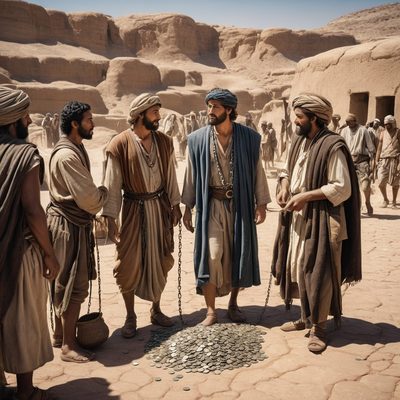
After throwing Joseph into a pit and selling him to Midianite traders for twenty pieces of silver, Joseph's brothers took his ornate coat, dipped it in goat's blood, and brought it to their father. "We found this. Do you recognize it?" Jacob recognized it immediately. "It is my son's robe! Some ferocious animal has devoured him." Jacob mourned for days and refused to be comforted. His sons lived with that secret for years.

Scripture: Genesis 37:31–35

Lesson: The brothers' lie worked in the sense that it covered their tracks. But it required them to watch their father grieve inconsolably for decades while saying nothing. Sins we hide rather than confess do not disappear — they become a weight we carry in every future interaction with the people we deceived. The cover-up often becomes more destructive than the original act.

Laban Switches Leah for Rachel illustration

18. Laban Switches Leah for Rachel

Jacob worked seven years for Rachel. On the wedding night, Laban substituted Leah — presumably relying on darkness, veils, and festivity to obscure the switch. Jacob did not discover it until morning. When he confronted Laban, Laban shrugged and said the custom was to marry off the older daughter first. Jacob had to work another seven years for Rachel.

Scripture: Genesis 29:15–30

Lesson: This is a case study in what deception actually produces. Laban got his older daughter married, temporarily. But he also handed Jacob a household full of competition, jealousy, and pain. Leah knew she was not chosen first. Rachel knew her husband had been trapped. Deception rarely produces the outcome it promised.

Ananias and Sapphira Lie About the Sale Price illustration

19. Ananias and Sapphira Lie About the Sale Price

In the early church, believers were selling property and laying the money at the apostles' feet for distribution to those in need. Ananias and Sapphira sold a piece of property, secretly kept part of the money for themselves, and brought only a portion to the apostles while implying it was the full amount. Peter told Ananias he had not lied to men but to God. Both Ananias and Sapphira died on the spot when confronted.

Scripture: Acts 5:1–11

Lesson: The specific sin was not keeping some of the money — Peter said explicitly they were free to keep it. The sin was performing generosity they did not actually possess, managing their reputation in the community through false display. The impulse to be seen as more generous, more spiritual, or more committed than we actually are is one of the most common forms of deception in religious community.

Gehazi Lies to Naaman and to Elisha illustration

20. Gehazi Lies to Naaman and to Elisha

After Elisha healed Naaman of leprosy and refused any payment, Gehazi — Elisha's servant — ran after Naaman's chariot and told him a story: Elisha had changed his mind and wanted silver and clothing for two prophets who had just arrived. Naaman gave it gladly. Gehazi hid the goods and returned to stand before Elisha. Elisha asked where he had been. Gehazi lied: "Your servant didn't go anywhere." Elisha knew everything. Naaman's leprosy transferred to Gehazi.

Scripture: 2 Kings 5:20–27

Lesson: Gehazi watched Elisha model integrity — refusing payment for what God had done freely — and then immediately used that situation for personal gain the moment he was alone. The things we witness in others at their best can still fail to shape us if we have not dealt with our own desires. Proximity to someone's virtue does not automatically produce virtue in us.

Peter Denies Knowing Jesus illustration

21. Peter Denies Knowing Jesus

At the Last Supper Peter had declared he would follow Jesus even to death. In Gethsemane he cut off a man's ear defending Jesus. But standing by a charcoal fire in the courtyard of the high priest, three times — once to a servant girl, once to another servant girl, once to bystanders — Peter denied that he knew Jesus at all. The rooster crowed. Peter went outside and wept bitterly.

Scripture: Matthew 26:69–75; Luke 22:54–62

Lesson: Fear under social pressure can override convictions we were completely certain of hours earlier. Peter's failure was not a moral collapse over days — it happened in minutes, in a casual setting, in response to people who had no actual power over him. The social pressure of a courtyard conversation undid what he had pledged in a formal dinner. Never be overconfident about how you will perform under pressure until you have actually been there.

Simon the Sorcerer Tries to Buy the Holy Spirit illustration

22. Simon the Sorcerer Tries to Buy the Holy Spirit

Simon was a sorcerer in Samaria who had amazed people with his magic for years. When Philip came preaching, Simon believed and was baptized. When he saw Peter and John pray and people receive the Holy Spirit, he offered them money: "Give me also this ability so that everyone on whom I lay my hands may receive the Holy Spirit." Peter's response was direct: "May your money perish with you, because you thought you could buy the gift of God with money."

Scripture: Acts 8:9–24

Lesson: Simon understood power. What he had not yet understood was that the Spirit's gifts are not a commodity, a service, or a technology. The impulse to acquire spiritual influence through transactions — money, status, connections — reflects a misunderstanding of what spiritual power actually is and Who holds it. You cannot purchase what can only be given.
Part 3: Impatience 8 lessons
Saul Offers the Sacrifice Without Samuel illustration

23. Saul Offers the Sacrifice Without Samuel

Before a battle with the Philistines, Samuel had told Saul to wait seven days for him to come and offer the sacrifice. The Philistine army was enormous. Saul's soldiers were scared and beginning to scatter. On the seventh day, Samuel still had not arrived. Saul felt he had no choice — he offered the burnt offering himself. The moment he finished, Samuel arrived. Samuel told him this act had cost him the kingdom.

Scripture: 1 Samuel 13:8–14

Lesson: Saul waited seven days — almost the full time. His failure was in the final hours. Impatience most often strikes not at the beginning of a wait but near the end. The pressure of circumstance and the fear of loss made acting feel more responsible than waiting. When God has given you instructions with a timeline, the hardest part is always the final stretch.

Sarah Gives Hagar to Abraham illustration

24. Sarah Gives Hagar to Abraham

God had promised Abraham and Sarah a son. Years passed and nothing happened. Sarah concluded that God must have been planning to build a family through her servant Hagar rather than through her directly. She gave Hagar to Abraham as a wife. Hagar became pregnant. Sarah immediately became resentful of Hagar. The conflict between these two women and their sons ripples through history to this day.

Scripture: Genesis 16:1–6

Lesson: Sarah's solution was culturally acceptable — the practice of a servant bearing children for a barren wife was common. The problem was not the method but the motivation: she stopped waiting for God's timeline and substituted her own plan. When what God promised seems to be taking too long, we are almost always tempted to help it along. The "help" usually creates complications that outlast us.

Israel Demands a King Immediately illustration

25. Israel Demands a King Immediately

Samuel had led Israel faithfully for years, but he was old and his sons were corrupt judges. The elders of Israel came to Samuel and demanded a king "such as all the other nations have." God told Samuel to give them what they asked but to warn them what a king would cost: their sons as soldiers, their daughters as servants, their fields and vineyards taxed, and eventually they would cry out for relief. They said they wanted a king anyway.

Scripture: 1 Samuel 8:1–22

Lesson: "Everyone else has one" is not a wise basis for major decisions. Israel rejected God's governance not because it was failing but because they wanted to look like their neighbors. The desire to be normal, to fit the pattern of the people around us, is one of the most consistently destructive forces in the Bible. God warned them explicitly. They chose the king anyway and learned the lesson the hard way.

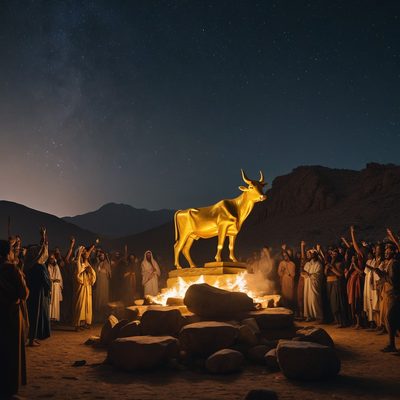
Aaron Makes the Golden Calf illustration

26. Aaron Makes the Golden Calf

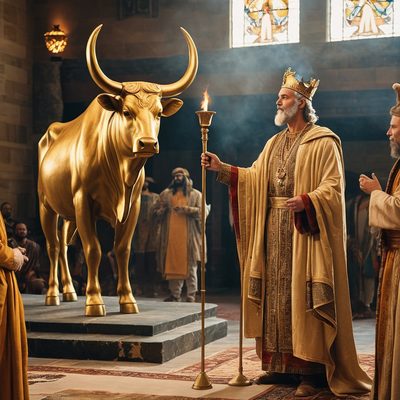
Moses had been on Mount Sinai for forty days receiving the law. The people grew restless and came to Aaron with a demand: "Make us gods who will go before us. As for this fellow Moses who brought us up out of Egypt, we don't know what has happened to him." Aaron — the high priest, Moses's brother, a man who had witnessed every miracle of the Exodus — collected their gold earrings, fashioned a calf, and declared, "These are your gods, Israel, who brought you up out of Egypt."

Scripture: Exodus 32:1–6

Lesson: Aaron's failure is stunning because of who he was. But the dynamic is straightforward: prolonged absence of visible leadership creates anxiety that demands a substitute. When the thing we have been trusting seems to disappear — a pastor, a mentor, a certainty — the pressure to find something tangible and immediate to follow is enormous. Aaron chose peace with the crowd over faithfulness to God. Leaders face this choice constantly.

Esau Sells His Birthright for Stew illustration

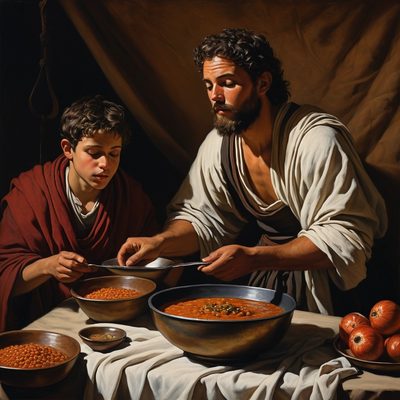
27. Esau Sells His Birthright for Stew

Esau came in from the field exhausted and starving. Jacob had made lentil stew. Esau said, "Quick, let me have some of that red stew! I'm famished!" Jacob saw the moment and said, "First sell me your birthright." Esau's response is one of the most casually self-destructive lines in scripture: "Look, I am about to die. What good is the birthright to me?" He ate, drank, got up, and left. The text adds: "So Esau despised his birthright."

Scripture: Genesis 25:29–34

Lesson: Nobody makes their worst decisions when they are rested, fed, and thinking clearly. Esau's trade was made in a moment of physical extremity when everything felt urgent and abstract future benefits felt meaningless. The decisions we most regret are almost always made when we are hungry, exhausted, lonely, or afraid. Build conditions that prevent those decisions, because you cannot trust yourself in those moments.

The Prodigal Son Demands His Inheritance Early illustration

28. The Prodigal Son Demands His Inheritance Early

A younger son went to his father and asked for his share of the estate — before the father had died. In that culture, this was essentially saying "I wish you were dead." The father divided his property between his sons. The younger son gathered everything, left for a distant country, and squandered it all in wild living. When a severe famine hit and he was feeding pigs and starving, he came to his senses and returned.

Scripture: Luke 15:11–24

Lesson: The prodigal's mistake was not just the spending — it was demanding independence before he had the maturity to steward it. Freedom without the wisdom to handle it is not freedom; it is a faster path to a different kind of prison. The son ended up serving pigs just to survive. The resources he thought would free him were consumed before he had developed the character to use them well.

The Israelites Demand Meat in the Desert illustration

29. The Israelites Demand Meat in the Desert

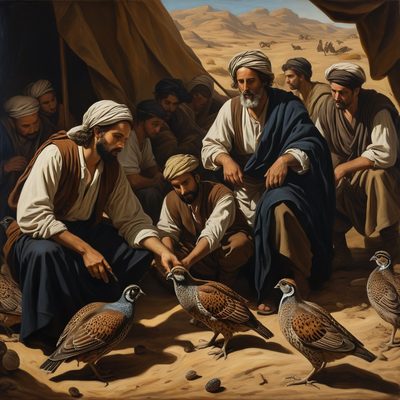
In the wilderness, the people of Israel began to crave other food. "If only we had meat to eat! We remember the fish we ate in Egypt at no cost — also the cucumbers, melons, leeks, onions and garlic. But now we have nothing at all except this manna." Moses was overwhelmed. God sent quail — so many that the birds piled up three feet deep around the camp for a full day's walk in every direction. The people ate greedily. While the meat was still between their teeth, God's anger burned against them.

Scripture: Numbers 11:4–34

Lesson: The Israelites were not starving — they had manna daily. What they craved was variety, pleasure, and the sensory comforts of their old life, even though that life had been slavery. The pattern of romanticizing our old condition while despising our current provision is remarkably consistent. What we left behind always looks better from a distance.

Balaam Goes With the Princes of Moab illustration

30. Balaam Goes With the Princes of Moab

Balak king of Moab sent princes to Balaam the prophet with payment to come and curse Israel. God told Balaam not to go. Balaam told the princes he could not come. Balak sent more distinguished princes with more generous payment. Balaam asked God again. God said he could go but only say what God told him. Balaam saddled his donkey and went — and God's anger burned because he went. The text reveals that Balaam went because he wanted the reward.

Scripture: Numbers 22:1–35; 2 Peter 2:15

Lesson: Balaam kept asking until he got a version of permission. This is a pattern: we bring something to God, hear "no," and then modify the request or wait and ask again, hoping the answer will change because the circumstances have slightly shifted. But often what has actually changed is not the situation — it is our level of wanting. The New Testament calls this the "way of Balaam": allowing the desire for payment to override the clear instruction you already received.
Part 4: Fear and Doubt 10 lessons
The Ten Spies Give a Bad Report illustration

31. The Ten Spies Give a Bad Report

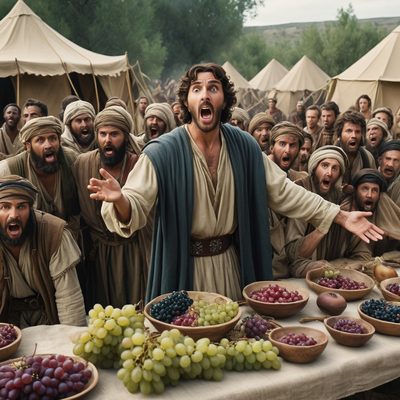
Moses sent twelve spies into Canaan. All twelve saw the same land — flowing with milk and honey, producing enormous clusters of grapes. But ten of the twelve gave this report: "We can't attack those people; they are stronger than we are. The land we explored devours those living in it. All the people we saw there are of great size. We seemed like grasshoppers in our own eyes, and we looked the same to them." Only Caleb and Joshua disagreed.

Scripture: Numbers 13:25–14:9

Lesson: Ten men looked at the same reality as two men and came to the opposite conclusion. The difference was not in the facts — the giants were real — but in what each group factored into their assessment. The ten forgot to include God in the equation. "We seemed like grasshoppers in our own eyes" is the key phrase: their self-perception determined their conclusion before the analysis began. Fear has a way of editing God out of the picture.

Elijah Runs From Jezebel illustration

32. Elijah Runs From Jezebel

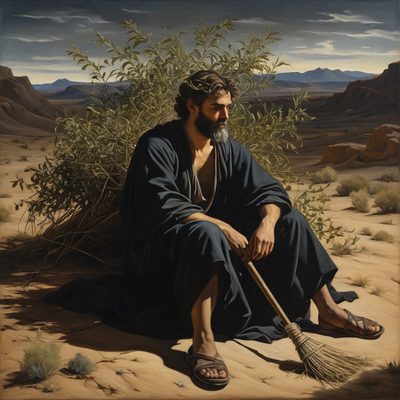
Elijah had just called fire down from heaven on Mount Carmel, executed the prophets of Baal, and ended a three-year drought. Then Jezebel sent him a message saying she would have him killed within twenty-four hours. Elijah ran. He fled into the wilderness, sat under a broom bush, and asked to die: "I have had enough, Lord. Take my life. I am no better than my ancestors."

Scripture: 1 Kings 19:1–5

Lesson: The collapse after a great spiritual victory is real and predictable. Elijah went from his greatest victory to complete despair in roughly forty-eight hours. Jezebel's threat was no more dangerous than the prophets of Baal had been — but he had nothing left. Emotional and physical exhaustion following intense spiritual engagement creates vulnerability. God's response was not a sermon; it was food, sleep, and rest. Sometimes what looks like a faith crisis is actually a body telling you it is empty.

Peter Walks on Water, Then Sinks illustration

33. Peter Walks on Water, Then Sinks

Jesus was walking toward the disciples' boat on the water in the middle of the night. Peter called out, "Lord, if it's you, tell me to come to you on the water." Jesus said, "Come." Peter got out of the boat and walked on water toward Jesus. Then he saw the wind. He became afraid and began to sink. "Lord, save me!" Jesus reached out his hand and caught him: "You of little faith. Why did you doubt?"

Scripture: Matthew 14:28–31

Lesson: Peter actually walked on water. He gets mocked for sinking, but he is the only disciple who got out of the boat at all. His failure came at the moment he shifted his focus from Jesus to the storm. The conditions had not changed — the wind was blowing before he got out. What changed was what he was looking at. When fear makes us redirect our attention from the person we trusted to the problem surrounding us, we begin to go under.

Thomas Will Not Believe Without Evidence illustration

34. Thomas Will Not Believe Without Evidence

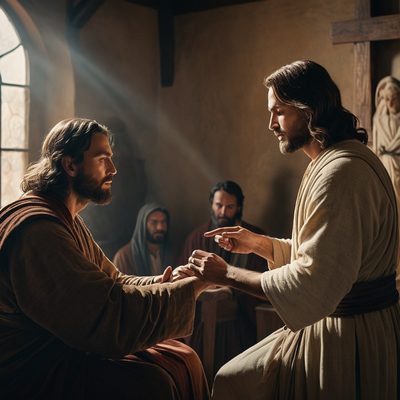
The other disciples told Thomas they had seen the risen Jesus. Thomas said, "Unless I see the nail marks in his hands and put my finger where the nails were, and put my hand into his side, I will not believe." A week later Jesus appeared again. He stood in front of Thomas and said, "Put your finger here; see my hands. Reach out your hand and put it into my side. Stop doubting and believe." Thomas said, "My Lord and my God."

Scripture: John 20:24–29

Lesson: Thomas has been called "doubting Thomas" for two thousand years, but his doubt was honest and his faith, when it came, was total. The lesson here is not that doubt is unforgivable — Jesus met Thomas in his doubt and provided what he needed. The lesson is that refusing to believe without personal proof puts you in the position of deciding the terms under which you will accept something. Jesus gently but clearly challenged Thomas to stop making unbelief a settled identity.

Gideon Asks for Multiple Signs illustration

35. Gideon Asks for Multiple Signs

An angel appeared to Gideon and called him a "mighty warrior." Gideon's response was to list his reasons this was impossible: his clan was the weakest in Manasseh, he was the least in his family. God promised to be with him. Gideon asked for a sign. God gave one. Then Gideon laid out a fleece and asked God to make it wet while the ground stayed dry. God did. Then he asked for the reverse — dry fleece, wet ground. God did that too. And then Gideon still needed God to encourage him through a dream he overheard in the enemy camp.

Scripture: Judges 6:11–40; 7:9–15

Lesson: Gideon is refreshing because he is the clearest example of the person who needs five confirmations before they act. Each sign was legitimate and God patiently provided them. But the pattern of requiring more and more evidence before moving forward can become its own kind of inaction dressed as prudence. At some point the confirmations we keep asking for are about our fear, not our discernment.

Moses Lists His Excuses at the Burning Bush illustration

36. Moses Lists His Excuses at the Burning Bush

When God appeared to Moses in the burning bush and commissioned him to go to Pharaoh, Moses offered five separate objections. Who am I to do this? What if they ask your name? What if they don't believe me? I am not eloquent — I am slow of speech and tongue. Please send someone else. God addressed each objection, provided signs, gave him Aaron as a spokesperson, and still Moses asked to be replaced. At that last request, the text says God's anger burned against Moses.

Scripture: Exodus 3:11–4:17

Lesson: Moses's objections were not irrational — they were real. He was a wanted man in Egypt, he had been gone forty years, and he genuinely was not a polished speaker. But God had already answered every concern before Moses raised it. Sometimes prolonged negotiation with a clear calling is not humility — it is fear disguised as modesty. God does not tend to be patient indefinitely with the refusal to begin.

Jonah Runs From Nineveh illustration

37. Jonah Runs From Nineveh

God told Jonah to go to Nineveh — the capital of Assyria, a brutal empire that was an enemy of Israel — and preach against its wickedness. Jonah immediately booked passage on a ship going to Tarshish: roughly the opposite direction. A massive storm arose. The sailors eventually threw Jonah overboard at his own suggestion. A great fish swallowed him. Three days later the fish vomited him onto dry land. He went to Nineveh.

Scripture: Jonah 1:1–17

Lesson: Jonah did not run because he doubted God's power. He ran because, as he later admitted, he knew God was gracious and compassionate and would forgive Nineveh if they repented — and he did not want that. He ran from obedience he disagreed with. It is relatively easy to obey instructions we agree with. The harder test is obeying when we think God is being too generous to people we believe do not deserve it.

Jonah Is Angry That God Spared Nineveh illustration

38. Jonah Is Angry That God Spared Nineveh

Nineveh did repent. The entire city fasted, put on sackcloth, and turned from their evil ways. God relented. Jonah was furious. He went outside the city and sat down to see what would happen, still hoping for destruction. God caused a plant to grow and give him shade; then killed the plant. Jonah grieved the plant more than the 120,000 people inside the city. God's final question to Jonah goes unanswered: "Should I not have concern for the great city of Nineveh?"

Scripture: Jonah 3:10–4:11

Lesson: Jonah's anger reveals a troubling capacity in religious people: to care more about plants — comfort, routine, preferences — than about people. His compassion for his own shade was greater than his compassion for a city of human beings. It is worth asking honestly whether the things that move us to grief and anger are proportionate to what actually matters.

The Disciples Are Afraid in the Storm illustration

39. The Disciples Are Afraid in the Storm

Jesus was asleep in the stern of the boat while a furious storm arose and waves swept over it. The disciples woke him: "Lord, save us! We're going to drown!" Jesus asked why they were afraid, then rebuked the winds and the waves, and everything was completely calm. The disciples were astonished and asked, "What kind of man is this?"

Scripture: Matthew 8:23–27

Lesson: The disciples had Jesus in the boat. He was sleeping, which meant the storm was not a crisis requiring his attention — it was simply weather. Their terror was real and understandable, but they woke him with the assumption that disaster was inevitable. When we are in the boat with Jesus and a storm arrives, the question is not whether we will feel afraid. The question is what conclusion we draw about the storm given Whose boat we are in.

Peter Fears the Circumcision Party illustration

40. Peter Fears the Circumcision Party

Peter had been eating openly with Gentile believers in Antioch — a radical step away from Jewish food laws. When certain people arrived from James's group in Jerusalem, Peter began to withdraw and separate himself, afraid of those in the circumcision group. The other Jewish believers joined his hypocrisy, and even Barnabas was led astray. Paul confronted Peter to his face publicly, because Peter's behavior was undermining the gospel's core message.

Scripture: Galatians 2:11–14

Lesson: Peter knew better. He had received the vision about clean and unclean foods. He had seen Cornelius's household receive the Holy Spirit. But under social pressure from a specific group, he publicly reversed behavior that his theology demanded. He did not change his beliefs — he changed his behavior to satisfy those who were watching. This is the particular cowardice of living one way when certain people are watching and another way when they are not.
Part 5: Poor Alliances and Bad Influences 10 lessons
Solomon Marries Seven Hundred Wives illustration

41. Solomon Marries Seven Hundred Wives

Solomon loved many foreign women — the daughter of Pharaoh, women of the Moabites, Ammonites, Edomites, Sidonians, and Hittites. God had told Israel not to intermarry with these nations because they would turn Israelite hearts after their gods. Solomon held fast to them in love. As he grew old, his wives turned his heart after other gods — Ashtoreth, Molek, Chemosh. He built high places for their gods and burned incense and offered sacrifices to them.

Scripture: 1 Kings 11:1–13

Lesson: Solomon did not set out to worship idols. He set out to form political alliances and satisfy personal desire, and the theology followed. The people we choose to do life with most closely will shape what we believe over time, regardless of what we intend. The influence does not usually arrive as a dramatic confrontation — it arrives slowly, through accommodation, habit, and the gradual normalization of what was previously unacceptable.

Samson Marries a Philistine Woman illustration

42. Samson Marries a Philistine Woman

Samson went down to Timnah and saw a Philistine woman who caught his attention. He came home and told his parents, "Get her for me as my wife." His parents objected: was there no acceptable woman among their own people? Samson's reason for insisting was that she "seemed right" to him. The text adds that this was actually within God's purposes — but what follows is a cascade of betrayal, violence, and loss that traces directly back to this choice.

Scripture: Judges 14:1–4

Lesson: "She seemed right to me" is not a sufficient foundation for a major life decision. Samson's relational choices were driven entirely by what attracted him in the moment. His extraordinary physical strength was paired with remarkable relational weakness — he repeatedly trusted people who had demonstrated they could not be trusted, because his desire overrode his discernment.

Samson Tells Delilah His Secret illustration

43. Samson Tells Delilah His Secret

Delilah had tried three times to discover the source of Samson's strength — each time he lied, she bound him according to his lie, and called for the Philistines. Three times. After the third failure she said, "How can you say, 'I love you,' when you won't confide in me?" She nagged him day after day until he was tired to death of it. Finally he told her everything. She had his head shaved while he slept. He did not know God had left him.

Scripture: Judges 16:4–21

Lesson: Samson knew Delilah was working for his enemies. He had watched her attempt to betray him three times without consequence to her. And he told her anyway because she framed the demand as a test of love. The manipulation of "if you loved me you would tell me" is ancient. It weaponizes real affection to extract consent that the person would never give if they were thinking clearly.

Lot Chooses to Live Near Sodom illustration

44. Lot Chooses to Live Near Sodom

When Abraham and Lot agreed to separate their flocks and families to avoid conflict, Abraham gave Lot first choice of the land. Lot looked around and saw the whole plain of Jordan — well-watered and fertile, like the garden of the Lord. He chose that direction. The text adds a detail: he pitched his tents near Sodom. Then in the next chapter: Lot was living in Sodom. The movement from "near" to "in" was gradual and apparently unremarkable.

Scripture: Genesis 13:10–13; 19:1

Lesson: Lot chose the land for its productivity, not its culture. Sodom's wickedness was not his deciding factor. But proximity to a culture eventually shapes you more than you shape it. His daughters' behavior after Sodom suggests the city had gotten into them. The things we choose to live near for economic or practical reasons — without factoring in their spiritual environment — have a way of becoming the things we live inside.

Jehoshaphat Allies With King Ahab illustration

45. Jehoshaphat Allies With King Ahab

Jehoshaphat, a godly king of Judah, made a marriage alliance with the wicked house of Ahab in Israel. He joined Ahab on a military campaign, despite a prophet's warning, and nearly died for it when the Syrians mistook him for Ahab. When he returned home, a prophet confronted him: "Should you help the wicked and love those who hate the Lord? Because of this, the wrath of the Lord is upon you." Jehoshaphat continued to make similar alliances afterward.

Scripture: 2 Chronicles 18:1–3; 19:1–3

Lesson: Jehoshaphat genuinely loved God and genuinely had a weakness for politically advantageous relationships with people who did not. His alliances with Ahab's family eventually devastated the next generation. The partnerships we make for practical benefit carry the values of the other party into our households and organizations, whether or not we intend them to.

Rehoboam Takes Counsel From His Peers illustration

46. Rehoboam Takes Counsel From His Peers

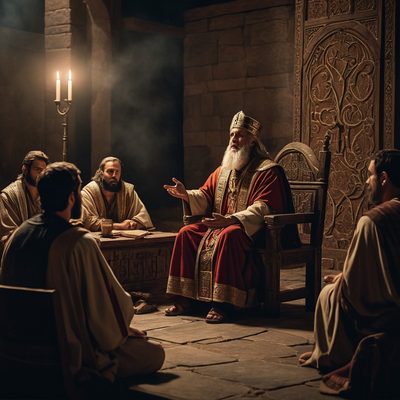
When the people asked Rehoboam to lighten their burden, he consulted the elders who said to listen to the people. Then he went to the young men he had grown up with, and they said to come back harder. He abandoned the elders' counsel, not because their advice was wrong but because his young friends' advice felt better. He told the people, "My little finger is thicker than my father's waist. My father laid on you a heavy yoke; I will make it even heavier."

Scripture: 1 Kings 12:6–16

Lesson: Rehoboam chose advice that matched his instinct rather than advice that matched reality. This is the core danger of surrounding yourself only with people who think like you: they will confirm you when you need to be challenged, and the result will feel decisive until it falls apart. The advisors who tell you what you want to hear are rarely the ones who will help you keep what you have.

Demas Forsakes Paul illustration

47. Demas Forsakes Paul

Near the end of his life, in his second letter to Timothy, Paul writes with unmistakable sadness: "Demas, because he loved this world, has deserted me and has gone to Thessalonica." Demas had been a trusted companion — he is mentioned alongside Luke in Paul's letter to the Colossians. Somewhere in the years between those letters, the pull of the present world outweighed the cost of the mission.

Scripture: 2 Timothy 4:10; Colossians 4:14; Philemon 1:24

Lesson: Demas did not fall in a dramatic public failure. He simply left. He went back to a city. The love of this present world is rarely loud; it is usually quiet — a gradual reordering of priorities toward comfort, security, and the life that feels more immediately rewarding. Nobody announces the moment they start putting the world first. It is noticed in hindsight, when someone who used to be there is not.

Mark Deserts the Mission illustration

48. Mark Deserts the Mission

John Mark accompanied Paul and Barnabas on their first missionary journey. When they reached Perga in Pamphylia, Mark left them and returned to Jerusalem. We are never told why. Later, when Barnabas wanted to take Mark on the second journey, Paul refused — the disagreement was sharp enough to split Paul and Barnabas permanently, two of the most effective partners in the history of the church. Eventually Paul reconciled with Mark and called him useful.

Scripture: Acts 13:13; 15:36–41; 2 Timothy 4:11

Lesson: Mark's desertion cost him dearly in the short term — Paul would not take him. But the story does not end there. Mark became the author of a gospel and was eventually restored to Paul's circle. The lesson has two sides: early failure in a commitment does not permanently define you, but it does have real consequences while the trust is being rebuilt.

Israel Intermarries at Baal-Peor illustration

49. Israel Intermarries at Baal-Peor

While Israel was camped near Moab, the men began to be sexually involved with Moabite women. The women then invited them to sacrifice to their gods. Israel ate and bowed down to Baal of Peor. A plague followed. The root of the whole episode was not primarily the theology — it began with relationships that carried spiritual consequences that were not considered at the outset.

Scripture: Numbers 25:1–9

Lesson: The pattern here is relational → ritual → ruin. No Israelite man planned to bow to Baal. They started with relationships that brought them into social contexts with different values, and the worship followed as a byproduct of belonging. The social and relational choices we make long before anything obviously spiritual happens are often the most spiritually significant decisions we make.

Jehoshaphat's Son Marries Into Ahab's Family illustration

50. Jehoshaphat's Son Marries Into Ahab's Family

Jehoshaphat made a marriage alliance between his son Jehoram and Athaliah, daughter of Ahab and Jezebel. Jehoram took the throne and immediately killed all his brothers. When Jehoram died, his son Ahaziah became king and walked in the ways of the house of Ahab "because his mother encouraged him to act wickedly." When Ahaziah died, Athaliah seized the throne and tried to kill all the royal heirs.

Scripture: 2 Chronicles 21:4–6; 22:1–4; 22:10

Lesson: The consequences of Jehoshaphat's alliance played out not in his reign but in his children's and grandchildren's. The person you or your children marry carries their family's values, habits, and allegiances into the next generation. The most consequential choices are often the ones whose effects take the longest to arrive.
Part 6: Jealousy and Comparison 8 lessons
Cain's Jealousy of Abel illustration

51. Cain's Jealousy of Abel

Cain brought an offering of fruit to God. Abel brought fat portions from the firstborn of his flock. God looked with favor on Abel's offering but not on Cain's. Cain was very angry and his face was downcast. God asked him directly: "Why are you angry? Why is your face downcast? If you do what is right, will you not be accepted?" Rather than examining his own offering, Cain focused on his brother's acceptance.

Scripture: Genesis 4:3–8

Lesson: God gave Cain a clear alternative path: do what is right. The problem God identified was not that Abel was successful but that Cain responded to that success with downward focus — he looked at his brother rather than at his own choices. Jealousy rarely motivates us to improve; it almost always directs our energy toward the person we envy instead of toward the change we need to make.

Joseph's Brothers Sell Him Into Slavery illustration

52. Joseph's Brothers Sell Him Into Slavery

Jacob's favoritism toward Joseph produced the predictable outcome: his brothers "hated him and could not speak a kind word to him." When Jacob gave Joseph the ornate coat, they "hated him all the more." When Joseph shared his dreams about them bowing to him, "they hated him all the more because of his dream." The jealousy that grew in that environment eventually led them to throw him in a pit and sell him to slave traders.

Scripture: Genesis 37:3–28

Lesson: The brothers' hatred was fed by their father's visible partiality. What Jacob sowed in favoritism, he reaped in family fracture. But the brothers' choice to act on their jealousy was their own. They could have named it, redirected it, or managed it. Instead they nursed it until it became something they were capable of acting on. Jealousy left unchecked does not stay emotional — it eventually produces action.

Saul's Jealousy of David illustration

53. Saul's Jealousy of David

After David killed Goliath, the women of Israel came out singing: "Saul has slain his thousands, and David his tens of thousands." From that day on Saul kept a jealous eye on David. He tried to pin David to the wall with a spear. He removed David from his presence and gave him a military command — hoping he would die in battle. He arranged David's marriage to expose him to danger. Every time David succeeded, Saul hated him more.

Scripture: 1 Samuel 18:6–16

Lesson: Saul's jealousy began with a song. A single comparison, heard in a moment of his own vulnerability, lodged itself and never left. He spent years of his reign obsessing over someone he had made into a competitor, while the actual work of governing went neglected. Jealousy has an extraordinary ability to redirect all of a person's energy toward a rival, leaving the real work undone.

The Elder Brother's Resentment illustration

54. The Elder Brother's Resentment

When the prodigal son returned and the father threw a party, the elder brother came in from the field and heard music and dancing. When he found out what was happening he became angry and refused to go in. He told his father: "All these years I've been slaving for you and never disobeyed your orders. Yet you never gave me even a young goat so I could celebrate with my friends. But when this son of yours came back after squandering your property with prostitutes, you kill the fattened calf for him!"

Scripture: Luke 15:25–32

Lesson: The elder brother had been home the whole time and failed to realize what he had. He described himself as "slaving" for his father — language that suggests his obedience had become duty without relationship. He had access to everything the father had; he simply did not celebrate it. Resentment about what others receive has a way of blinding us to what we already possess.

Rachel Is Jealous of Leah illustration

55. Rachel Is Jealous of Leah

When Leah began having children and Rachel remained childless, Rachel became jealous of her sister. She said to Jacob, "Give me children, or I'll die!" Jacob became angry with her: "Am I in the place of God, who has kept you from having children?" Rachel then gave her servant to Jacob as a wife — the same solution Sarah had used — and the competition between the sisters became the engine driving an increasingly complicated household.

Scripture: Genesis 30:1–8

Lesson: Rachel had Jacob's love; Leah had children. Each had what the other desperately wanted and neither had what she most craved. The competition they entered destroyed their ability to enjoy what they had. Comparison with the person who has what we lack is one of the most reliable ways to make ourselves miserable about things that might otherwise be genuinely good.

Miriam and Aaron Speak Against Moses illustration

56. Miriam and Aaron Speak Against Moses

Miriam and Aaron began criticizing Moses — using his marriage as the stated reason, but revealing the real issue quickly: "Has the Lord spoken only through Moses? Hasn't he also spoken through us?" Their objection was not really about the wife. It was about authority, recognition, and their place in the hierarchy. God summoned all three to the tent of meeting and asked directly: "Why then were you not afraid to speak against my servant Moses?"

Scripture: Numbers 12:1–9

Lesson: Criticism that is ostensibly about one thing but actually about something else is difficult to address because the stated issue and the real issue are different. Miriam and Aaron brought up the wife because "I want more recognition" was harder to say out loud. The gap between the reason we give for our criticism and the reason we actually have is worth examining honestly, especially when we find ourselves consistently critical of someone in a position of authority.

The Corinthian Church Divides Over Leaders illustration

57. The Corinthian Church Divides Over Leaders

The church in Corinth had divided into factions: "I follow Paul," "I follow Apollos," "I follow Cephas," and, rather smugly, "I follow Christ." Paul's response was pointed: "Is Christ divided? Was Paul crucified for you? Were you baptized in the name of Paul?" He called the factionalism worldly and immature, like infants still on milk. The divisions were built on preference and personality attachment rather than on anything theological.

Scripture: 1 Corinthians 1:10–17; 3:1–9

Lesson: Preferring one teacher's style or approach is reasonable; making that preference a tribal identity that divides community is not. Corinth had taken normal human affinity for different communication styles and turned it into a competition that undermined the body. The question Paul asked is still worth asking: whose name are we baptized in? That answer should settle the question of who our primary allegiance belongs to.

The Disciples Argue Over Seats in the Kingdom illustration

58. The Disciples Argue Over Seats in the Kingdom

The mother of James and John came to Jesus with her sons and knelt before him with a request. When he asked what she wanted, she said, "Grant that one of these two sons of mine may sit at your right and the other at your left in your kingdom." Jesus told them they did not know what they were asking. The other ten disciples heard about it and were indignant — not, apparently, because the request was theologically wrong, but because James and John had tried to get there first.

Scripture: Matthew 20:20–28

Lesson: The indignation of the other ten reveals they had the same desire — they were simply slower to act on it. Rather than a room full of people where nine were above this kind of competition and two were not, Jesus had a room full of people competing for position. He responded by redefining greatness so completely that the competition itself became irrelevant.
Part 7: Greed and Materialism 8 lessons
Achan Keeps the Devoted Things illustration

59. Achan Keeps the Devoted Things

After Israel's victory at Jericho, God had commanded everything in the city to be devoted to him — destroyed or placed in his treasury. Nothing was to be taken for personal use. Achan saw a beautiful robe from Babylonia, two hundred shekels of silver, and a bar of gold. He wanted them. He took them and hid them under his tent. Israel then lost to the tiny city of Ai, and God told Joshua there was sin in the camp. Achan confessed.

Scripture: Joshua 7:1–26

Lesson: The most striking detail is that Achan hid the items under his tent. He did not sell them, use them, or display them — they were buried, unavailable, completely unusable. But he could not leave them either. Greed often drives us to take things we cannot even enjoy, simply because we cannot bear to leave them behind. The cost to the entire community of Israel because of one man's hidden acquisition is a sobering measure of what private compromise can cost the people around us.

The Rich Young Ruler Walks Away illustration

60. The Rich Young Ruler Walks Away

A young man ran to Jesus and asked what he must do to inherit eternal life. Jesus listed commandments; the man said he had kept them all since his youth. Jesus looked at him and loved him: "One thing you lack. Go, sell everything you have and give to the poor, and you will have treasure in heaven. Then come, follow me." The man's face fell. He walked away sad because he had great wealth. Jesus watched him go.

Scripture: Mark 10:17–22

Lesson: The young man was not cruel or dishonest — Jesus looked at him with love. His problem was a specific, named attachment that he was not willing to release. Notice that Jesus gave him exactly the thing he asked for — the one thing he lacked. The one thing turned out to be the thing he could not do. Everyone has a particular attachment that functions as a barrier. For this man it was wealth. The willingness to name it honestly is the first step.

The Parable of the Rich Fool illustration

61. The Parable of the Rich Fool

A rich man's fields produced an abundant harvest. He reasoned with himself: his barns were too small. He would tear them down, build bigger ones, store all his grain and goods, then tell himself, "Take life easy; eat, drink, and be merry." God said to him, "You fool! This very night your life will be demanded from you. Then who will get what you have prepared for yourself?" Jesus added: "This is how it will be with whoever stores up things for themselves but is not rich toward God."

Scripture: Luke 12:16–21

Lesson: The rich man's plan was not inherently immoral — saving resources is prudent. The problem was the horizon of his thinking. His entire plan was built around himself: my crops, my barns, my grain, my goods, my soul. He had no plan for tomorrow that included anyone else or anything beyond. "Rich toward God" suggests generosity toward others; the man had become so absorbed in accumulation that tomorrow had only one occupant.

Judas Betrays Jesus for Thirty Pieces of Silver illustration

62. Judas Betrays Jesus for Thirty Pieces of Silver

Judas went to the chief priests and asked, "What are you willing to give me if I deliver him over to you?" They counted out thirty pieces of silver. From that moment on Judas watched for an opportunity to hand Jesus over. Later, when he saw that Jesus had been condemned, Judas was seized with remorse. He returned the thirty pieces and tried to give them back. When the priests refused, he threw them into the temple and went and hanged himself.

Scripture: Matthew 26:14–16; 27:3–5

Lesson: Thirty pieces of silver was the price of a gored slave. Judas sold what he had spent three years watching, walking with, and learning from — for the equivalent of a month's wages. Whatever Judas's precise motivations, the result was a choice made for a sum he could not keep and that he immediately recognized as worthless once it was in his hands. The things that seem worth betraying what we value never are.

Nabal Refuses to Help David illustration

63. Nabal Refuses to Help David

David's men had protected Nabal's shepherds in the wilderness. When David sent men to ask for provisions during a feast, Nabal — whose name literally means "fool" — responded with contempt: "Who is this David? Who is this son of Jesse? Many servants are breaking away from their masters these days. Why should I take my bread and water and the meat I have slaughtered for my shearers, and give it to men coming from who knows where?" His wife Abigail quickly went to David with food to prevent a slaughter.

Scripture: 1 Samuel 25:1–38

Lesson: Nabal had benefited from David's protection and refused to acknowledge it. His response was not just stingy — it was insulting. He had resources in abundance and chose contempt rather than generosity. The text says "he was surly and mean in his dealings." Mean-spiritedness in a position of abundance is a particular kind of foolishness because there is no scarcity to justify it; it is simply character.

Gehazi Runs After Naaman for Gifts illustration

64. Gehazi Runs After Naaman for Gifts

After Elisha healed Naaman and refused any payment, Gehazi thought, "My master was too easy on Naaman by not accepting from him what he brought. As surely as the Lord lives, I will run after him and get something from him." He caught Naaman, told a story about two prophets needing silver and clothing, received it, and hid it before returning to Elisha. Elisha confronted him and Naaman's leprosy transferred to Gehazi.

Scripture: 2 Kings 5:20–27

Lesson: Gehazi watched Elisha make a principled choice and immediately calculated how to profit from it in secret. He did not disagree with Elisha's principle — he knew it was right, which is why he hid the gifts and lied about where he had been. Acting in the shadow of someone else's integrity while taking what they refused is not just greedy; it undermines the testimony their integrity was meant to carry.

The Unforgiving Servant illustration

65. The Unforgiving Servant

Jesus told a parable about a servant who owed his king ten thousand bags of gold. He begged for time. The king was moved with compassion and cancelled the entire debt. The same servant then found a fellow servant who owed him a hundred silver coins. He grabbed him, choked him, and demanded payment. When the fellow servant begged for time, the first servant refused and had him thrown into prison. When the king heard about it, he reversed his forgiveness entirely.

Scripture: Matthew 18:23–35

Lesson: The contrast between the debts is staggering: the first man had been forgiven what today would equal billions; he refused to forgive what would equal a few months' wages. The pattern of receiving enormous grace and then refusing small mercy to others is something Jesus treated as a failure of comprehension — you cannot have genuinely understood what was done for you and behave that way toward others. Unforgiveness toward others is often a sign we have not actually processed the depth of our own forgiveness.

Felix Delays Acting on Paul's Case illustration

66. Felix Delays Acting on Paul's Case

The governor Felix was already well acquainted with the Way when Paul was brought before him. He listened to Paul's defense, adjourned the hearing, and said he would decide when Lysias the commander arrived. He also sent for Paul frequently because he hoped Paul would offer him a bribe. Paul talked to him about righteousness, self-control, and the judgment to come — and Felix became afraid. He sent Paul away. Two years passed and Felix left Paul in prison as a favor to the Jews.

Scripture: Acts 24:22–27

Lesson: Felix was moved — he became afraid. He knew enough. But he kept sending Paul away. His decisions were driven by money he hoped to receive and social capital he did not want to spend. The moment of genuine spiritual conviction passed repeatedly, and each time he chose the practical over the transforming. Repeated delays of a decision we know we need to make tend to make the decision easier to keep avoiding, not easier to finally make.
Part 8: Anger and Rash Actions 9 lessons
Moses Strikes the Rock illustration

67. Moses Strikes the Rock

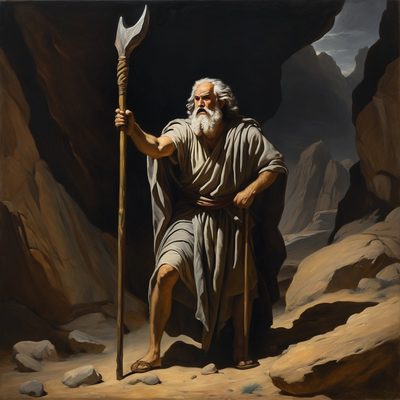
At Meribah, the people again had no water and quarreled with Moses and Aaron. God told Moses to speak to the rock and it would pour out water. Moses was furious with the people. He said, "Listen, you rebels, must we bring you water out of this rock?" He struck the rock with his staff — twice. Water gushed out. But God said to Moses and Aaron, "Because you did not trust in me enough to honor me as holy in the sight of the Israelites, you will not bring this community into the land."

Scripture: Numbers 20:1–13

Lesson: Moses had done almost everything right for forty years. In one moment of unmanaged anger — striking instead of speaking, saying "must we" rather than "God will" — he misrepresented God to the people and it cost him the destination. A lifetime of faithfulness does not immunize us against the specific failures that come out of anger. A person who has proven faithful under years of sustained pressure can still fail in a single moment of anger.

Moses Kills the Egyptian illustration

68. Moses Kills the Egyptian

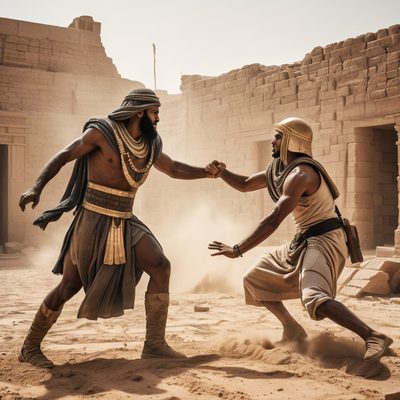
Moses, who had grown up in Pharaoh's palace, went out and watched his people laboring. He saw an Egyptian beating a Hebrew slave. He glanced around, saw no one, and killed the Egyptian, hiding the body in the sand. The next day he saw two Hebrews fighting. When he tried to intervene, the one in the wrong said, "Are you thinking of killing me as you killed the Egyptian?" Pharaoh heard about it and Moses fled.

Scripture: Exodus 2:11–15

Lesson: Moses saw injustice and responded — but his response destroyed his position, forced him to flee, and set back his ability to help the very people he wanted to protect by forty years. Passion for justice is good; acting on it impulsively without considering the consequences is not. What Moses did in secret did not remain hidden, and his ability to help was dramatically reduced by the method he chose.

Saul Makes a Rash Oath illustration

69. Saul Makes a Rash Oath

On a day when Saul's army was pursuing the Philistines, Saul bound the army with an oath: "Cursed be anyone who eats food before evening comes, before I have avenged myself on my enemies!" Nobody ate all day, which left the army exhausted. Jonathan, who had not heard the oath, ate some honey. When Saul discovered it, he was prepared to execute his own son. The army intervened and rescued Jonathan.

Scripture: 1 Samuel 14:24–46

Lesson: Saul made a dramatic public oath in the heat of battle that made sense to him emotionally but weakened his army strategically. His oath was about his vengeance, his enemies, his timing — not about what would actually make his men effective. Rash commitments made to demonstrate seriousness or passion frequently create problems that practical thinking would have avoided. The people who suffer most are often not the ones who made the oath.

Jephthah's Rash Vow illustration

70. Jephthah's Rash Vow

Before battle with the Ammonites, Jephthah made a vow to God: "If you give the Ammonites into my hands, whatever comes out of the door of my house to meet me when I return in triumph from the Ammonites will be the Lord's, and I will sacrifice it as a burnt offering." He won the battle. His daughter came out to meet him — his only child — with timbrels and dancing. He was devastated but felt bound by his vow.

Scripture: Judges 11:30–40

Lesson: Jephthah made an offer to God that was vague, dramatic, and untested by reflection. He never considered what might actually come out of his door. The vow was not an act of faith — it was bargaining under pressure, offering something unspecified to secure something specific. God never asked for this vow. The disaster that followed came entirely from words Jephthah chose, not from a divine requirement. We do not bind God with dramatic promises; we only bind ourselves.

Herod's Rash Promise to Herodias's Daughter illustration

71. Herod's Rash Promise to Herodias's Daughter

At his birthday banquet, Herod was so pleased by the daughter of Herodias's dancing that he promised with an oath to give her whatever she asked, up to half his kingdom. The girl consulted her mother. The mother said, "The head of John the Baptist." Herod was greatly distressed — he had liked listening to John, and he knew he was a righteous man. But because of his oaths and his dinner guests, he gave the order.

Scripture: Matthew 14:6–11

Lesson: Herod's oath was made in a moment of social delight, witnessed by guests, and it trapped him. He knew the request was wrong — the text says he was distressed. But he was more afraid of public embarrassment before his guests than he was of doing something unjust. The fear of public shame is one of the most powerful forces that drives otherwise reasonable people to do things they know are wrong.

Peter Cuts Off the Servant's Ear illustration

72. Peter Cuts Off the Servant's Ear

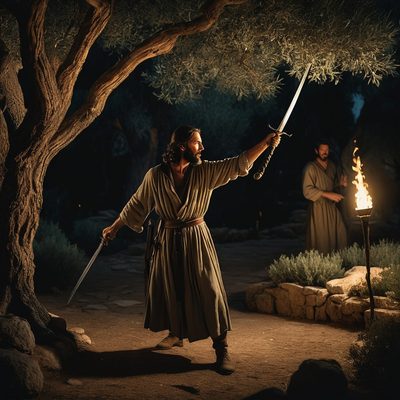
When the soldiers and officials came to arrest Jesus in the Garden of Gethsemane, Peter drew his sword and cut off the right ear of the high priest's servant. Jesus immediately said, "No more of this!" and healed the man's ear. He told Peter to put the sword away: "Shall I not drink the cup the Father has given me?" Peter had the right instinct — defend what matters — but the wrong method, the wrong moment, and a complete misunderstanding of what was actually happening.

Scripture: John 18:10–11; Luke 22:50–51

Lesson: Peter acted decisively in defense of someone he loved. That impulse was not wrong. But his action was based on a misreading of the situation, and Jesus had to undo the damage. Righteous anger aimed at a real problem, applied without understanding what is actually needed, can create wounds that require immediate healing. Good intentions channeled through poor discernment can make things worse.

Jonah Is Angry About the Plant illustration

73. Jonah Is Angry About the Plant

After Nineveh repented and God relented, Jonah sat east of the city brooding. God provided a leafy plant that grew over him to give shade, and Jonah was very happy about the plant. But the next dawn God provided a worm that chewed the plant and it withered. Then God provided a scorching east wind. Jonah grew faint and angry enough to die over the plant. God pointed out that Jonah grieved a plant he did not tend while resenting God's concern for 120,000 people.

Scripture: Jonah 4:5–11

Lesson: Jonah's emotional response to the plant was completely real — comfort matters, and losing it hurts. But God used that real emotion to expose a proportion problem. Jonah cared deeply about his own comfort and very little about a city full of people. The things that move us to strong feeling — and the things that leave us indifferent — reveal what we actually value, regardless of what we say we believe.

Simeon and Levi Overreact to Dinah's Assault illustration

74. Simeon and Levi Overreact to Dinah's Assault

After their sister Dinah was assaulted by Shechem son of Hamor, Simeon and Levi negotiated a false peace — offering to intermarry if all the men of the city were circumcised. While the men were still in pain recovering, Simeon and Levi attacked the entire city and killed every male. They plundered the city, seized the livestock, and took the women and children. Jacob said, "You have brought trouble on me by making me obnoxious to the Canaanites and Perizzites."

Scripture: Genesis 34:1–30

Lesson: Their rage at the assault on their sister was understandable, and the injustice was real. But they responded with deception and mass violence in a situation that had been moving toward negotiated resolution. On his deathbed Jacob said their anger was fierce and cruel and that he would scatter their descendants. The desire to right a wrong through disproportionate force rarely produces justice; it usually produces a new cycle of harm.

Samson's Revenge Cycle illustration

75. Samson's Revenge Cycle

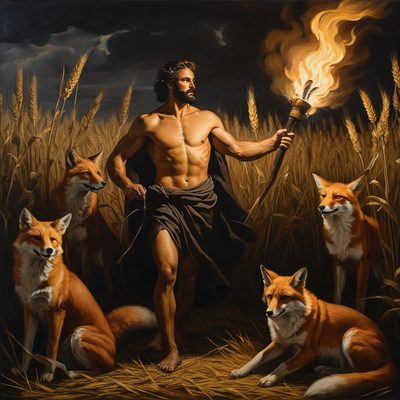
At his wedding feast, Samson posed a riddle with a wager. His wife was pressured into getting the answer from him and gave it away. Samson paid the wager by killing thirty men and taking their belongings. He returned to his father's house in anger. His wife was given to his best man. When Samson came back and found out, he tied torches to the tails of three hundred foxes and burned the Philistines' fields. They burned his wife and father-in-law. He attacked them. They attacked. The cycle continued.

Scripture: Judges 14:12–15:8

Lesson: Almost every act of violence in Samson's story was a response to the previous act of violence. Each retaliation felt justified in the moment because something genuinely wrong had just been done. But the cycle never ended — it escalated. Retaliation satisfies the feeling of justice while usually producing more injustice. Samson used his extraordinary gifts entirely in the service of personal grudges.
Part 9: Neglect of Responsibility 8 lessons
Eli Fails to Discipline His Sons illustration

76. Eli Fails to Discipline His Sons

Eli's sons, Hophni and Phinehas, were priests who had no regard for the Lord. They took portions of sacrifices before the fat was burned, sleeping with the women who served at the entrance to the tent. Eli knew all of this. He confronted his sons with words: "Why do you do such things? No, my sons; it is not a good report." He said nothing more and did nothing more. A man of God came to Eli and told him he honored his sons above God.

Scripture: 1 Samuel 2:12–29; 3:13

Lesson: Eli was not indifferent — he confronted his sons. But confrontation without consequence is not correction. God specifically charged that Eli "failed to restrain them." The gap between having a difficult conversation and actually holding someone accountable is the space where most parental and leadership failure lives. Knowing something is wrong, saying so, and then allowing it to continue is not the same as addressing it.

David Fails to Act After Amnon Assaults Tamar illustration

77. David Fails to Act After Amnon Assaults Tamar

Amnon, David's firstborn son, assaulted his half-sister Tamar. The text says, "When King David heard all this, he was furious." But he did not punish Amnon because he loved him, for he was his firstborn son. Tamar lived in desolation in her brother Absalom's house. Absalom hated Amnon for what he had done and waited two years before taking matters into his own hands, killing Amnon at a shearing feast.

Scripture: 2 Samuel 13:1–29

Lesson: David's fury produced no action, which produced Absalom's rage, which produced a murder, which produced Absalom's three-year exile, which eventually produced his rebellion. A chain of catastrophes began at the point where David felt the right emotion but refused to act on it. Righteous anger that results in no accountability does not protect the victim — it simply delays and compounds the consequences.

David Commits Adultery With Bathsheba illustration

78. David Commits Adultery With Bathsheba

In the spring, when kings went out to war, David stayed in Jerusalem. From his rooftop he saw Bathsheba bathing. He asked who she was, was told she was the wife of Uriah the Hittite — one of his own mighty men — and sent for her anyway. When she became pregnant, David called Uriah home, hoping he would sleep with his wife and cover the situation. When Uriah refused to go home while his men were in the field, David arranged to have him placed where the fighting was fiercest.

Scripture: 2 Samuel 11:1–27

Lesson: The opening detail — "at the time when kings go off to war, David sent Joab" — suggests David was already in the wrong place. He was at rest when he should have been leading. The sin that followed began with an abdication of responsibility. Idleness in a person of capacity and responsibility does not usually produce neutrality; it tends to produce trouble. The problem was not that David walked on the roof — it was that he had nothing else demanding his attention.

The Disciples Sleep in Gethsemane illustration

79. The Disciples Sleep in Gethsemane

In the garden, Jesus asked Peter, James, and John to keep watch with him while he prayed. He found them asleep when he returned. He woke them, asked them to watch, prayed again. Returned again and found them asleep — "their eyes were heavy." He let them sleep, prayed a third time, then returned and said, "Are you still sleeping and resting? Look, the hour has come." He had asked for one thing in one of the most significant hours in history: stay awake and pray.

Scripture: Matthew 26:36–45

Lesson: The disciples were exhausted and did not understand the weight of the moment. We rarely do. The hours in which being present, watchful, and prayerful matters most are often the hours when we are least equipped to manage it. Spiritual attentiveness is not something we conjure up automatically at the moment it is needed — it is something built by practice in ordinary hours.

Martha Is Distracted From What Matters illustration

80. Martha Is Distracted From What Matters

When Jesus came to their house, Mary sat at his feet listening to his teaching while Martha was distracted by all the preparations. Martha came to him and said, "Lord, don't you care that my sister has left me to do the work by myself? Tell her to help me." Jesus answered her: "Martha, Martha, you are worried and upset about many things, but few things are needed — or indeed only one. Mary has chosen what is better, and it will not be taken away from her."

Scripture: Luke 10:38–42

Lesson: Martha was not doing something wrong — hospitality and preparation are good things. The problem was that the thing she was preparing for had arrived, and she was too busy preparing to experience it. The service she was rendering in the kitchen had become more important to her than the presence of the person she was serving. We can be so occupied with doing things for God that we miss being with God.

The Man Who Buried His Talent illustration

81. The Man Who Buried His Talent

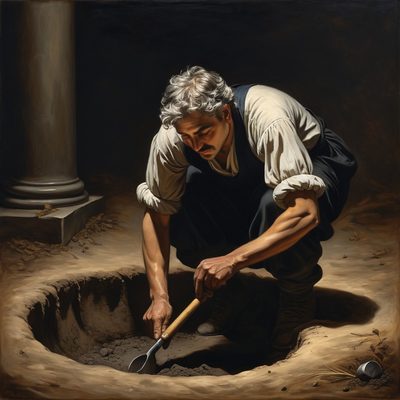
In the parable of the talents, a master gave different amounts to his servants and went on a journey. The servant who received five talents doubled them. The servant with two doubled them. The servant with one dug a hole and hid it. He explained himself when the master returned: "Master, I knew that you are a hard man, harvesting where you have not sown and gathering where you have not scattered seed. So I was afraid and went out and hid your talent in the ground." The master called him wicked and lazy.

Scripture: Matthew 25:14–30

Lesson: The one-talent servant's fear was not a small thing — it paralyzed him completely. He did not gamble the talent, waste it, or give it away. He preserved it perfectly. But inaction driven by fear of failure is still inaction, and the master judged it as harshly as if he had squandered it. A theology of a harsh God who is impossible to please produces servants who would rather do nothing than risk doing it wrong.

The Five Foolish Virgins illustration

82. The Five Foolish Virgins

Jesus told a parable about ten virgins waiting for the bridegroom. Five were wise and brought extra oil for their lamps; five were foolish and brought none. The bridegroom was delayed. All ten fell asleep. At midnight the call came. The foolish five found their lamps going out and asked the wise five for oil. "No, there may not be enough for both us and you. Go and buy." While they were buying, the bridegroom arrived. When they returned and knocked, the door was shut.

Scripture: Matthew 25:1–13

Lesson: The foolish virgins were not indifferent — they wanted to be there. They had lamps; they just had not prepared for a wait. The failure was not bad intentions but inadequate preparation for the possibility that things would not go according to their expected schedule. Preparation for a long delay when you are expecting a short one is a kind of wisdom that looks excessive until you need it.

Israel Forgets God After Joshua Dies illustration

83. Israel Forgets God After Joshua Dies

After Joshua's death, the people of Israel did not know the Lord or what he had done for Israel, because that generation had grown up after the time of Joshua. Each subsequent generation needed the story to be taught, and when the teaching stopped, the memory stopped. The cycle in Judges is relentless: the people forget God, they suffer, they cry out, God delivers them, they forget again.

Scripture: Judges 2:10–19

Lesson: Spiritual memory is not automatic. The generation that directly experiences something knows it. The generation that only hears about it from tired parents who assume they absorbed it may not. Every community and family has to actively decide to transmit what it values — it does not transfer by proximity or assumption. The gap between living experience and inherited story is where the forgetting happens.
Part 10: Spiritual Compromise 7 lessons
Gideon Makes a Golden Ephod illustration

84. Gideon Makes a Golden Ephod

After his great victory over the Midianites, Gideon took an offering from the gold plundered in battle and made it into an ephod — a priestly garment. He set it up in his own town of Ophrah. All Israel prostituted themselves by worshipping it there, and it became a snare to Gideon and his family. The text notes this as a stark failure in a man who had just defeated Israel's oppressors through remarkable faith.

Scripture: Judges 8:24–27

Lesson: Gideon's ephod may have been intended as a memorial, a way to honor God for the victory. But it became an object of worship instead. The distance between a memorial and an idol is shorter than people expect. Things created to point toward God have a way of becoming things that replace him, especially when they are beautiful, expensive, and associated with a powerful personal experience.

Jeroboam Makes the Golden Calves illustration

85. Jeroboam Makes the Golden Calves

When Jeroboam became king of the northern tribes after the kingdom divided, he was afraid that if the people kept going to Jerusalem to worship they might eventually transfer their loyalty back to Rehoboam. So he made two golden calves and said to the people, "It is too much for you to go up to Jerusalem. Here are your gods, Israel, who brought you up out of Egypt." He was not rejecting God — he was managing God to serve political purposes.

Scripture: 1 Kings 12:26–33

Lesson: Jeroboam's sin was using religion as a tool of political control. He was not an atheist; he was a manipulator. He shaped worship around what would serve his interests — keeping people loyal to him rather than making them accessible to God. The use of religion for institutional self-protection rather than genuine encounter with God is a version of idolatry that is extremely difficult for the people inside it to recognize.

Saul Consults the Witch at En-Dor illustration

86. Saul Consults the Witch at En-Dor

Before his final battle, Saul was terrified. He inquired of God but received no answer — no dreams, no Urim, no prophets. Saul then disguised himself and went to find a medium at En-dor, the practice he had previously banned from Israel. He asked her to bring up Samuel. Samuel appeared and confirmed that God had departed from Saul. The next day Saul died in battle.

Scripture: 1 Samuel 28:3–20

Lesson: Saul turned to the forbidden source not out of devotion to occult practice but out of desperation in God's silence. When we feel God is not answering, the temptation to seek answers through other means — superstition, manipulation, ungodly counsel — becomes real. The silence of God in a season of crisis is not an invitation to find a substitute voice. Often God's silence is itself part of the message.

The Galatians Return to the Law illustration

87. The Galatians Return to the Law

The Galatians had received the gospel of grace, experienced the Spirit, and begun well. Then teachers arrived telling them they needed to be circumcised and follow the Mosaic law to be truly acceptable. Paul was astonished: "I am astonished that you are so quickly deserting the one who called you to live in the grace of Christ and are turning to a different gospel." He asked pointedly: "Did you receive the Spirit by the works of the law, or by believing what you heard?"

Scripture: Galatians 1:6; 3:1–5

Lesson: The Galatians were not abandoning Christianity for paganism — they were adding requirements to it. The movement from "saved by grace through faith" to "but also you need to do these things to be really acceptable" is one of the oldest and most persistent distortions of the gospel. It appeals to the deep human instinct that we need to earn our standing. Grace that requires nothing of us feels either too good or too cheap, and we keep trying to supplement it.

The Church at Laodicea Is Lukewarm illustration

88. The Church at Laodicea Is Lukewarm

In the letter to Laodicea, Jesus says he knows their deeds — they are neither cold nor hot. He wishes they were one or the other: "Because you are lukewarm — neither hot nor cold — I am about to spit you out of my mouth." The Laodiceans said, "I am rich; I have acquired wealth and do not need a thing." Jesus's assessment: wretched, pitiful, poor, blind, and naked.

Scripture: Revelation 3:14–17

Lesson: Laodicea's problem was not obvious wickedness; it was comfortable indifference. They were functional, self-sufficient, and untroublesome. Wealth had made them feel that they lacked nothing — which meant they felt no need for God either. The most dangerous spiritual condition may not be outright rebellion but the settled contentment of having just enough comfort to stop being hungry for something more.

The Church at Ephesus Loses Its First Love illustration

89. The Church at Ephesus Loses Its First Love

The church at Ephesus receives high marks in Jesus's letter: they have worked hard, persevered, tested false apostles, endured hardship, and not grown weary. But: "Yet I hold this against you: You have forsaken the love you had at first. Consider how far you have fallen! Repent and do the things you did at first. If you do not repent, I will come to you and remove your lampstand from its place."

Scripture: Revelation 2:1–5

Lesson: Ephesus had everything except the thing that made everything else matter. You can have correct doctrine, disciplined practice, and endurance — and still lose the relationship that motivated it all. Faithful service that loses its love becomes a kind of religious performance. The check Jesus offered was simple: go back and do the first things — not because they produce the feeling, but because love is demonstrated in action, and action can restore the feeling.

Solomon Worships the Gods of His Wives illustration

90. Solomon Worships the Gods of His Wives

After seven hundred wives and three hundred concubines, Solomon built high places for Chemosh — the detestable god of Moab — and for Molek — the detestable god of the Ammonites. He did this for all his foreign wives. God told Solomon twice he should not follow other gods. Solomon did not follow the Lord completely as David his father had done. His theological departure was so gradual and so complete that the wisest man who ever lived ended in a chapter that simply lists the gods he served.

Scripture: 1 Kings 11:4–10

Lesson: Solomon received wisdom supernaturally from God, wrote Proverbs about the dangers of sexual compromise, and still fell to exactly the thing he had warned others about. Knowledge and wisdom are not the same thing. Knowing what is right does not automatically produce the will to do it, especially when the compromise is gradual, socially acceptable, and motivated by affection. Even the most gifted people are not immune to their appetites.
Part 11: Pride in Religion 6 lessons
The Pharisees Add to the Law illustration

91. The Pharisees Add to the Law

Jesus confronted the Pharisees and teachers of the law: "You have let go of the commands of God and are holding on to human traditions." They had created extensive traditions about handwashing, tithing even of tiny herbs, elaborate rules about the Sabbath. These traditions were not inherently wicked, but they had come to carry more weight than the actual law — and they were used to judge others while the teachers themselves avoided the harder requirements of justice, mercy, and faithfulness.

Scripture: Matthew 23:23–28; Mark 7:1–13

Lesson: Religious systems tend to accumulate rules over time. The rules are usually added with good intentions — to prevent violations of actual commands. But the added rules eventually take on a life of their own, and enforcing them becomes the measure of righteousness rather than the things the rules were protecting. When religious practice becomes primarily about compliance and appearance, it has usually already lost its center.

Saul Spares Agag and the Best Livestock illustration

92. Saul Spares Agag and the Best Livestock

God commanded Saul to completely destroy the Amalekites and everything belonging to them. Saul defeated them but spared King Agag and the best sheep, cattle, fat calves, and lambs — everything that was good. When Samuel arrived, Saul greeted him: "The Lord bless you! I have carried out the Lord's instructions." Samuel heard livestock in the background. Saul explained: they were spared to sacrifice to God. Samuel responded: "To obey is better than sacrifice."

Scripture: 1 Samuel 15:1–23

Lesson: Saul kept the best animals and justified it with religion — he planned to sacrifice them. But what God had commanded was destruction, not sacrifice. This is a very human pattern: substituting a religious act we prefer for the obedience God specifically asked for, and calling the substitution devotion. The religious frame made Saul's disobedience feel not only acceptable but generous. "To obey is better than sacrifice" is one of the most enduring corrections in scripture.

Praying and Fasting to Be Seen illustration

93. Praying and Fasting to Be Seen

In the Sermon on the Mount, Jesus warned against practicing righteousness in order to be seen by others. About giving: do not announce it with trumpets as the hypocrites do in the synagogues and on the streets, to be honored by others. About prayer: do not be like the hypocrites who love to pray standing in the synagogues and on street corners to be seen. About fasting: they disfigure their faces to show others they are fasting.

Scripture: Matthew 6:1–18

Lesson: The practices Jesus described — giving, prayer, fasting — were commanded and good. The problem was the audience. When the goal of a spiritual practice is to be seen performing it, the performance has replaced the practice. Jesus said the hypocrites already have their reward — the admiration they performed for. The question behind every religious action is: who am I actually doing this for?

The Corinthians Abuse the Lord's Supper illustration

94. The Corinthians Abuse the Lord's Supper

When the Corinthians came together to eat the Lord's Supper, Paul said, they were not really eating the Lord's Supper at all. Each person was going ahead with their own meal without waiting — one was hungry while another was drunk. The wealthier members were eating their own food while the poor members who had brought nothing went without. Paul said this was eating and drinking without discerning the body of Christ, which had serious consequences.

Scripture: 1 Corinthians 11:17–34

Lesson: The Corinthians turned a meal of unity into a display of social stratification. They were technically gathering in the right place for the right event and doing the wrong thing entirely. The ritual without the meaning had become worse than not gathering at all — it actively reinforced the divisions in the community. Religious gatherings that reproduce social hierarchies rather than subverting them have inverted their purpose.

Uzzah Touches the Ark illustration

95. Uzzah Touches the Ark

When David was bringing the ark of God back to Jerusalem on a new cart, the oxen stumbled. Uzzah reached out and took hold of the ark to keep it from falling. God's anger burned against Uzzah and he died there beside the ark. David was afraid and angry. He stopped and left the ark at the nearby house of Obed-Edom for three months.

Scripture: 2 Samuel 6:1–11

Lesson: Uzzah's instinct — keep the holy thing from falling — seems completely natural. But the ark was not supposed to be on a cart at all; it was supposed to be carried by the Levites on poles. The entire situation was already wrong before Uzzah touched it. His death was shocking, but the deeper lesson is in David's later careful consultation of how God had commanded the ark to be carried. Good intentions do not override the importance of how God has said something should be done.

David Fails to Consult God About Moving the Ark illustration

96. David Fails to Consult God About Moving the Ark

On the first attempt to bring the ark to Jerusalem, David assembled thirty thousand men, put the ark on a new cart as the Philistines had done, and processed with full celebration. After Uzzah died, David stopped and later consulted the priests. He found the answer in Deuteronomy: no one but the Levites was to carry the ark, on their shoulders, using the poles. The second attempt, done correctly, succeeded.

Scripture: 1 Chronicles 15:1–15

Lesson: The first attempt failed not because David's heart was wrong but because his method was. He adopted the Philistine method for moving the ark — a cart pulled by oxen — rather than looking up how God had prescribed it. It is worth noting that the Philistines had moved it on a cart and nothing went wrong for them. But they were not Israel. The standard God holds his people to is not the same standard applied to those who do not know him.
Part 12: Relationship Failures 4 lessons
Jacob Shows Obvious Favoritism to Joseph illustration

97. Jacob Shows Obvious Favoritism to Joseph

Israel loved Joseph more than any of his other sons because Joseph had been born to him in his old age, and he made him an ornate robe. When his brothers saw that their father loved him more than any of them, they hated him and could not speak a kind word to him. Jacob's favoritism was not private — it was displayed in material gifts, in preferential treatment, and in giving Joseph a supervisory role over his brothers. The family dynamics it created destroyed the family for decades.

Scripture: Genesis 37:3–4

Lesson: Jacob had been the victim of his parents' favoritism — Isaac had favored Esau and Rebekah had favored him. He had experienced directly what partiality produces. And he repeated the pattern anyway. Love that we do not distribute fairly among children does not just affect the favored child; it damages every sibling relationship in the home. What we endure in our family of origin becomes our default if we never consciously address it.

Laban Deceives Jacob With Leah illustration

98. Laban Deceives Jacob With Leah

Jacob worked seven years for Rachel, who was loved for her beauty. The years seemed like only a few days because of his love for her. When the time came, Laban gathered everyone and held a feast — and at night he brought Leah to Jacob instead of Rachel. In the morning, Jacob realized what had happened. "Why have you deceived me? I served you for Rachel, didn't I?" Laban's response was to offer Rachel for another seven years of work.

Scripture: Genesis 29:20–30

Lesson: Laban was Jacob's uncle — family. He also cheated him relentlessly for twenty years. The people with the most access to us are not automatically the most trustworthy. Family relationships and longstanding connections do not, by themselves, create integrity. Blind trust in people simply because they are family or long-known associates is its own kind of foolishness.

Paul and Barnabas Split Over John Mark illustration

99. Paul and Barnabas Split Over John Mark

Paul and Barnabas were planning a second missionary journey and Barnabas wanted to take John Mark with them. Paul refused — Mark had deserted them on the first journey at Pamphylia and had not continued with them in the work. The disagreement became so sharp that they separated. Barnabas took Mark and sailed to Cyprus. Paul chose Silas and went overland through Syria and Cilicia.

Scripture: Acts 15:36–41

Lesson: Two godly, experienced, effective people looked at the same situation — John Mark's past desertion — and drew completely opposite conclusions. Paul saw a liability; Barnabas saw someone worth investing in. Both perspectives proved correct in different ways: Paul's missions were not undermined, and Mark became a restored, effective worker. The sharpness of the disagreement is not the lesson; the diversity of valid perspectives on the same person or situation is.

The Corinthians Take Each Other to Court illustration

100. The Corinthians Take Each Other to Court

Paul was appalled to hear that members of the Corinthian church were taking legal disputes against each other before pagan judges. "If any of you has a dispute with another, do you dare to take it before the ungodly for judgment instead of before the Lord's people?" He said this was already a defeat. Better to be wronged, better to be cheated, than to bring the community's internal conflicts into public courts before unbelievers.

Scripture: 1 Corinthians 6:1–8

Lesson: The believers in Corinth were right that their grievances were real. They were wrong about the appropriate venue. Paul's argument was not primarily practical — it was reputational and theological. The community that claims to belong to a kingdom that will one day judge the world cannot model trustworthy dispute resolution within its own walls if it runs to external courts every time there is a conflict.
Part 13: Spiritual Blindness and Missed Moments 20 lessons
Nicodemus Misunderstands Being Born Again illustration

101. Nicodemus Misunderstands Being Born Again

Nicodemus was a Pharisee and member of the Jewish ruling council. He came to Jesus at night and acknowledged him as a teacher from God. Jesus told him no one can see the kingdom of God unless they are born again. Nicodemus took it literally: "How can someone be born when they are old? Surely they cannot enter a second time into their mother's womb!" Jesus was describing spiritual rebirth; Nicodemus was trying to fit the concept into physical categories.

Scripture: John 3:1–10

Lesson: Nicodemus was not stupid — he was one of Israel's most educated teachers. But his entire framework was material and legal: he understood birth, law, bloodline, and observance. When Jesus described something outside that framework, Nicodemus reached for the nearest physical analogy and got stuck there. Applying the wrong framework to a spiritual concept is not a failure of intelligence; it is a failure of category. What we already know can prevent us from hearing what we need to learn.
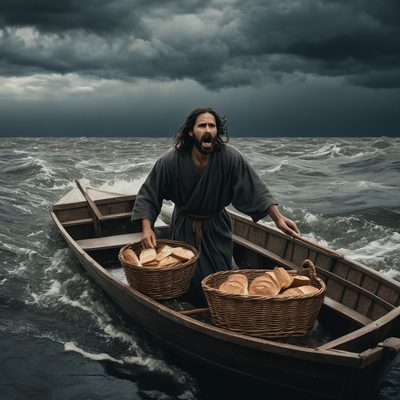
The Disciples Do Not Understand the Feeding of the 5,000 illustration

102. The Disciples Do Not Understand the Feeding of the 5,000

After feeding five thousand people with five loaves and two fish, Jesus walked on water to the disciples' boat in a storm. They were terrified. The text says, "They had not understood about the loaves; their hearts were hardened." Mark explicitly connects their fear of Jesus walking on water to their failure to comprehend what had just happened with the bread. The miracle they had just witnessed and participated in should have reframed everything that came next.

Scripture: Mark 6:52

Lesson: Spiritual experiences do not automatically produce spiritual understanding. The disciples had watched Jesus multiply food for five thousand people — they had distributed it themselves. And yet hours later they were terrified by another demonstration of the same power. We can be deeply involved in remarkable things and still fail to let them change our operating assumptions for the next crisis.
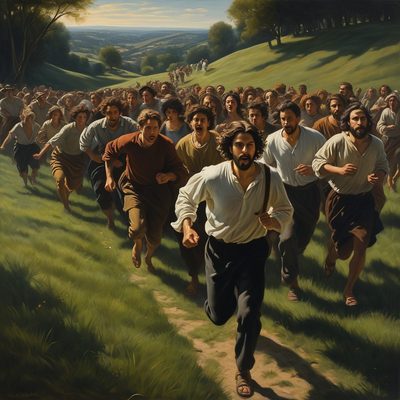
The People Want to Make Jesus King by Force illustration

103. The People Want to Make Jesus King by Force

After Jesus fed five thousand people, the crowd began to say, "Surely this is the Prophet who is to come into the world." Jesus, knowing they intended to come and make him king by force, withdrew again to a mountain by himself. The crowd wanted a king who would solve their food problem. They had experienced one miracle and immediately built a political program around it.

Scripture: John 6:14–15

Lesson: The crowd was not wrong to want a king — they were wrong about what kind of king they wanted and what they wanted him for. They wanted the bread to keep coming. Jesus knew that the king they were imagining would not address what they actually needed. We frequently try to get Jesus to endorse the agenda we already have rather than aligning ourselves with his. He tends to quietly withdraw from those invitations.
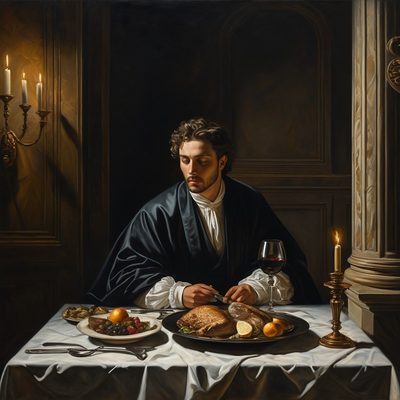
The Rich Man and Lazarus illustration

104. The Rich Man and Lazarus

Jesus told a parable about a rich man who was dressed in purple and fine linen, eating sumptuously every day. At his gate lay a beggar named Lazarus, covered in sores, longing to eat what fell from the rich man's table. Both died. Lazarus went to Abraham's side; the rich man went to torment. In his anguish the rich man called to Abraham to send Lazarus to warn his brothers. Abraham said they already had Moses and the Prophets — if they did not listen to them, they would not be persuaded even by someone rising from the dead.

Scripture: Luke 16:19–31

Lesson: The rich man's sin was not dramatic cruelty — he did not drive Lazarus away or abuse him. He simply walked past him every day and never let Lazarus become real to him. The suffering that is near us, visible to us, and consistently ignored becomes invisible through repetition. The man at the gate who needed food while the man inside ate sumptuously is one of the most quietly damning pictures of proximity without compassion in the Bible.

Agrippa Is Almost Persuaded illustration

105. Agrippa Is Almost Persuaded

After Paul's defense before King Agrippa, Agrippa said to Paul: "Do you think that in such a short time you can persuade me to be a Christian?" Paul answered: "Short time or long — I pray to God that not only you but all who are listening to me today may become what I am." Agrippa stood up and said to Festus: "This man could have been set free if he had not appealed to Caesar."

Scripture: Acts 26:28–32

Lesson: Agrippa acknowledged Paul's case was compelling. He saw no crime. He might have been "almost persuaded." And he walked out. The almost-persuaded position is not a stable one — it combines enough understanding to be responsible for the decision with enough resistance to keep postponing it. The question Paul implicitly raised was what Agrippa was waiting for.
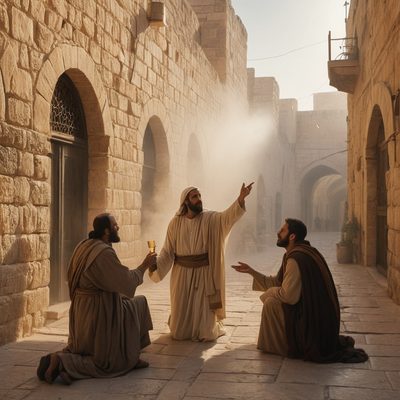
Disciples Wonder Who Sinned for the Blind Man illustration

106. Disciples Wonder Who Sinned for the Blind Man

When Jesus and his disciples passed a man who had been blind from birth, the disciples asked: "Rabbi, who sinned, this man or his parents, that he was born blind?" Jesus said, "Neither this man nor his parents sinned, but this happened so that the works of God might be displayed in him." Then he healed the man. The disciples had spent their question on finding someone to blame, while the purpose of the situation was entirely different.

Scripture: John 9:1–7

Lesson: The disciples' question was not malicious — it reflected their sincere theological framework for why suffering happened. But the framework was wrong, and it oriented them toward blame rather than toward response. When we encounter someone's pain or difficulty, the impulse to diagnose its cause — to figure out whose fault it is — can delay or prevent us from doing the only actually useful thing: helping.
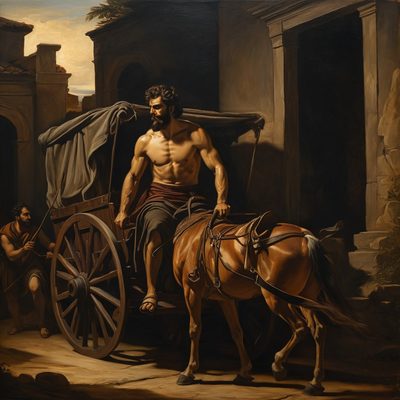
Naaman Is Offended by Simple Instructions illustration

107. Naaman Is Offended by Simple Instructions

The commander of the Aramean army came to Elisha with horses and chariots and a letter from the king. He expected Elisha to come out, wave his hand over the leprosy, and call on the name of his God. Instead, Elisha sent a messenger to tell him to go wash in the Jordan River seven times. Naaman was furious. "Are not Abana and Pharpar, the rivers of Damascus, better than all the waters of Israel?" He almost went home without being healed.

Scripture: 2 Kings 5:9–14

Lesson: Naaman had a detailed expectation of how his healing should look. When the process looked simpler, less ceremonial, and less dignified than he imagined, he rejected it. His servants pointed out gently that if the prophet had told him to do something hard, he would have done it — why not something simple? We frequently resist the ordinary and unglamorous version of what we need because we were expecting something impressive.

Ham Uncovers His Father's Nakedness illustration

108. Ham Uncovers His Father's Nakedness

After the flood, Noah planted a vineyard, made wine, drank too much, and lay uncovered in his tent. Ham — the father of Canaan — saw his father's nakedness and went and told his brothers outside. Shem and Japheth took a garment, walked in backward, and covered their father without looking at him. When Noah awoke and found out what Ham had done, he cursed Canaan.

Scripture: Genesis 9:20–25

Lesson: Ham saw something embarrassing about his father and immediately publicized it to his brothers. Shem and Japheth's response was the opposite — they covered what they had been told about without looking. This contrast is one of scripture's clearest pictures of how to handle a leader's or parent's failure: covering and restoring private dignity versus exposing and spreading the embarrassing detail. The impulse to tell others what is wrong with someone who has authority over us rarely produces anything good.

Noah Gets Drunk After the Flood illustration

109. Noah Gets Drunk After the Flood

Noah had survived the flood, built an altar, received God's covenant and the rainbow. Then he planted a vineyard, made wine, and drank himself into unconsciousness in his tent. The man who had faithfully built an ark through decades of probable ridicule lost his dignity in a vineyard. His failure gave Ham an opportunity that produced generational consequences.

Scripture: Genesis 9:20–21

Lesson: Intense sustained faithfulness followed by relief and achievement creates a particular vulnerability. The ark was built; the water had receded; the covenant was sealed. Noah planted something new. And then he drank too much. The period after a major achievement or a sustained season of difficulty is not the time to relax our vigilance — it is often the time when we are least protected.

Lot's Wife Looks Back illustration

110. Lot's Wife Looks Back

As Lot's family fled Sodom before its destruction, the angels said specifically: "Flee for your lives! Don't look back, and don't stop anywhere in the plain! Flee to the mountains or you will be swept away!" Lot's wife looked back, and she became a pillar of salt. Jesus later referenced her when warning his disciples about clinging to what they are being asked to leave behind.

Scripture: Genesis 19:17, 26; Luke 17:32

Lesson: "Remember Lot's wife" is one of Jesus's shortest sermons. The temptation to look back at what we have been called to leave — not just to glance but to linger, to go back mentally even as we move forward physically — is real and recurring. The instruction to not look back is not arbitrary; it is a test of whether you have actually left. Partial departure, with your heart still turned toward what you were called away from, is not departure.
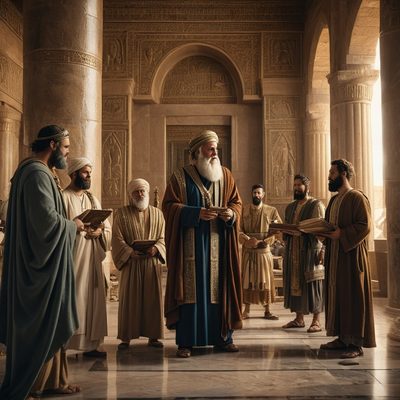
Hezekiah Prays for More Years, Then Wastes Them illustration

111. Hezekiah Prays for More Years, Then Wastes Them

When Hezekiah was told he would die of his illness, he turned to the wall and prayed through tears. God told Isaiah to go back and tell him he would have fifteen more years. Those fifteen years produced the visit from Babylon he handled so poorly — and, Hezekiah acknowledged, his son Manasseh, who became one of Judah's worst kings. Hezekiah's response to learning this — "there will be peace and security in my lifetime" — is one of the most candid moments of self-interest in scripture.

Scripture: 2 Kings 20:1–21; 2 Kings 21:1

Lesson: Hezekiah prayed desperately for more time and received it. The years he gained turned out to contain his worst decisions and his worst successor. The thing we beg God for most urgently is not always the thing that is best for us or the people who come after us. The answered prayer that extends our timeline sometimes extends our opportunity to do damage as much as good.
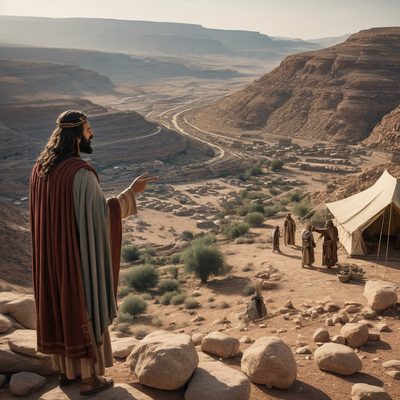
Balaam Loves the Wages of Wickedness illustration

112. Balaam Loves the Wages of Wickedness

Balaam was a genuine prophet — God spoke to him, he heard accurately, and when he opened his mouth to curse Israel, blessings came out instead. But the New Testament describes what Balaam actually wanted: he loved the wages of wickedness. He could not curse Israel, so he advised Balak to get the Israelites to intermarry with Moabite women and compromise themselves — which worked. He found a way to help Balak harm Israel without actually cursing them.

Scripture: Numbers 22–24; 2 Peter 2:15; Revelation 2:14

Lesson: Balaam is the case of a person with genuine spiritual gifts and access, whose motivations were corrupt. He could not be bought to speak falsely — his prophetic gift was too real for that. So instead he found a workaround: counsel that accomplished what the bribe was meant to purchase, while keeping his hands technically clean. Spiritual capability and spiritual integrity are not the same thing.
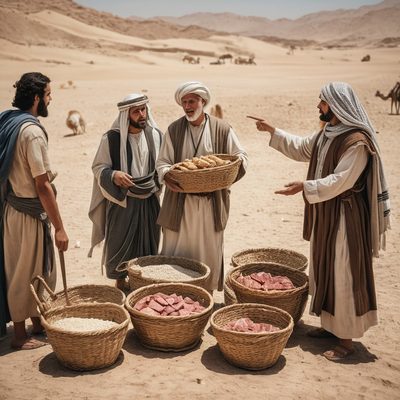
The Israelites Complain About Manna illustration

113. The Israelites Complain About Manna

The Israelites had been eating manna for months in the wilderness. It appeared every morning, could be ground and baked into bread, and sustained the whole nation. They began to despise it. "We are disgusted with this miserable food!" They remembered Egypt's fish, cucumbers, melons, leeks, onions, and garlic. God sent quail until it was coming out of their nostrils. His anger burned because they had despised the provision he had sustained them with daily.

Scripture: Numbers 11:4–20

Lesson: Manna was miraculous — supernaturally provided, never absent, nutritionally sufficient. The problem was that it was monotonous. The people compared what God was giving them to what the world had given them and found God's provision inferior. It is possible to receive genuine, consistent, life-sustaining care from God and still be miserable about it because it does not match our preference for variety and self-determination.
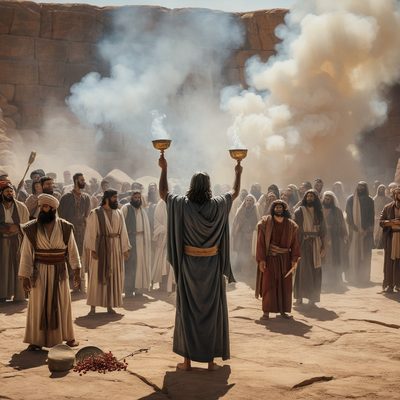
Korah Questions Moses's Authority illustration

114. Korah Questions Moses's Authority

Korah gathered two hundred fifty leaders of the community — "well-known community leaders who had been appointed members of the council" — and rose up against Moses and Aaron. "You have gone too far! The whole community is holy, every one of them, and the Lord is with them. Why then do you set yourselves above the Lord's assembly?" Moses fell facedown. God proposed a test: each man would bring his censer and God would show who was holy.

Scripture: Numbers 16:1–11

Lesson: Korah's complaint was dressed in the language of equality and fairness — "everyone is holy, not just you two." It sounds democratic and appealing. But the real issue was that Korah wanted the position Moses and Aaron held. His theological framing — "the whole community is holy" — was technically correct and completely misapplied. Sound arguments can be constructed in service of personal ambition. The language of justice and equality can be borrowed to pursue personal advancement.

The Israelites Worship the Golden Calf illustration

115. The Israelites Worship the Golden Calf

While Moses received the Ten Commandments on Mount Sinai — including the command to have no other gods — the people at the base of the mountain were building the golden calf and saying, "These are your gods, Israel, who brought you up out of Egypt." The distance between the mountain where the law was being given and the valley where it was being violated was measurable in geography. The time between Exodus and idolatry was weeks.

Scripture: Exodus 32:1–10

Lesson: The speed of the Israelites' return to idolatry after their miraculous deliverance is alarming and instructive. They had crossed the Red Sea on dry ground. They had watched the Egyptian army drown. They had seen water come from a rock. Within weeks they needed something they could see and touch. The desire for a tangible, manageable, visible representation of the divine is persistent. Genuine encounter with God does not automatically immunize us against the appeal of a substitute.
Peter's Inconsistency at Antioch illustration

116. Peter's Inconsistency at Antioch

In Antioch, before certain people came from Jerusalem, Peter was eating with Gentile believers. When they arrived, he began to draw back and separate himself from the Gentiles, fearing the circumcision group. He knew better — he had received the vision of clean and unclean foods, had entered Cornelius's house, had defended Gentile believers at the Jerusalem council. But in person, with the Jerusalem group watching, he changed his behavior.

Scripture: Galatians 2:11–14

Lesson: Peter did not need more theological education. He needed to live what he already knew when the social cost was present. The gap between what we believe privately and what we practice publicly, particularly when a specific audience is watching, is one of the defining integrity challenges for any person of faith. The people we are afraid of tend to have more influence over our behavior than the convictions we hold.

Hymenaeus and Alexander Shipwreck Their Faith illustration

117. Hymenaeus and Alexander Shipwreck Their Faith

Paul mentions two men by name: Hymenaeus and Alexander, who had rejected faith and a good conscience and "suffered shipwreck with regard to the faith." Elsewhere Hymenaeus is mentioned as saying the resurrection had already taken place, which destroyed the faith of some. They had not drifted or gradually faded — they had actively rejected something they once held.

Scripture: 1 Timothy 1:19–20; 2 Timothy 2:17–18

Lesson: The combination Paul identifies — rejecting faith and a good conscience — is instructive. The shipwreck of faith and the abandonment of conscience tend to go together. When we begin making choices that violate our conscience and stop dealing with the damage that causes, we tend to eventually revise our beliefs to match our behavior rather than revising our behavior to match our beliefs. The conscience is the early warning system. Ignoring it long enough changes what we believe.

Jehoshaphat Repeats His Alliance Error illustration

118. Jehoshaphat Repeats His Alliance Error

Even after being rebuked by the prophet for his alliance with Ahab, Jehoshaphat made another commercial alliance — this time with Ahab's son Ahaziah. They built a fleet of trading ships together. The prophet Eliezer told Jehoshaphat the ships would be destroyed because of his alliance with Ahaziah. The ships were wrecked. Then Jehoshaphat refused to let Ahaziah's men join the next venture — but only after the first one had already failed.

Scripture: 2 Chronicles 20:35–37; 1 Kings 22:49

Lesson: Jehoshaphat was corrected once, backed away, and then made the same category of error again with a different partner from the same family. He applied the lesson after the second failure. Some learning only happens through repeated experience of the same consequence, which is frustrating but true. The goal is to apply lessons the first time they are taught rather than waiting for the second failure.
Diotrephes Refuses to Welcome Fellow Believers illustration

119. Diotrephes Refuses to Welcome Fellow Believers

The apostle John wrote that Diotrephes, who loved to be first, would not welcome them. Not only that — he also refused to welcome other brothers and sisters in Christ, stopped those who wanted to do so, and put them out of the church. He spread malicious nonsense about John. The language suggests a local church leader who used his position as a gatekeeper to exclude people whose presence threatened his primacy.

Scripture: 3 John 9–10

Lesson: Diotrephes did not reject the gospel; he rejected people. His gatekeeping was personal, not theological. The use of religious authority to exclude people who threaten your position — rather than to protect the community from genuine harm — is one of the ways power corrupts in ministry contexts. The motivation beneath the action matters enormously.
The Disciples Ask Jesus to Send the Children Away illustration

120. The Disciples Ask Jesus to Send the Children Away

People were bringing little children to Jesus for him to place his hands on them. The disciples rebuked them. Jesus was indignant and said, "Let the little children come to me, and do not hinder them, for the kingdom of God belongs to such as these." The disciples thought they were managing Jesus's time efficiently. They had decided, on his behalf, that children were not a priority.

Scripture: Mark 10:13–16

Lesson: The disciples filtered the access of those who seemed least important. Children had no status, no resources, and no obvious contribution to the mission as they understood it. The people whose access we restrict — the ones we decide are not worth the time of those we are protecting — reveal our assumptions about what and who matters. Jesus's indignation is one of the rare emotional responses explicitly noted in the gospels. He took the children seriously. The disciples had not.

Afterword

These 120 stories share a common thread: they were written down not to make their subjects look foolish, but because the people who compiled scripture understood that honest accounts of failure are more useful than edited versions that only record success.

Adam and Eve are in the same book as Abraham. Elijah's collapse under the broom tree is in the same story as his fire from heaven. Peter's denial is in the same gospel as his confession. The Bible does not hide its heroes' failures because the real lesson is not "look at these exceptional people" — it is "look at what happens to ordinary people when they give in to fear, pride, impatience, and greed, and look at what happens when they return."
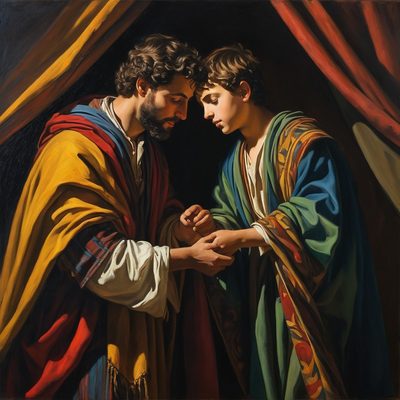
Every story in this collection is recoverable. Most of the people in it continued after their failure. The scripture is less interested in cataloguing ruins than in describing the path home.

All Scripture references are from the NIV unless otherwise noted.