101. Nicodemus Misunderstands Being Born Again
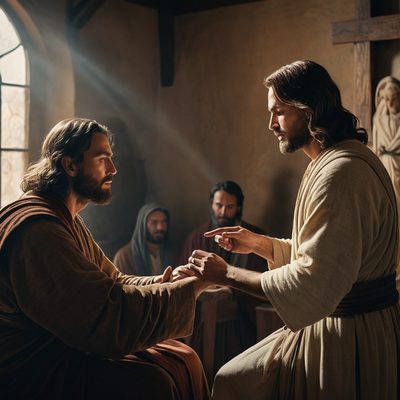
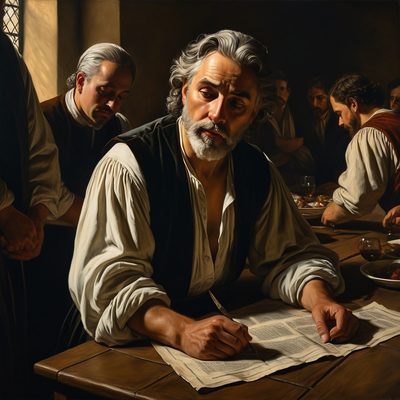
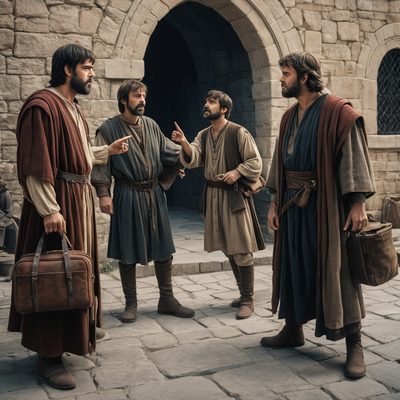
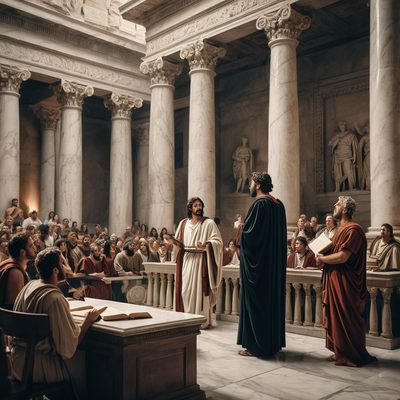
Nicodemus was a Pharisee and member of the Jewish ruling council. He came to Jesus at night and acknowledged him as a teacher from God. Jesus told him no one can see the kingdom of God unless they are born again. Nicodemus took it literally: "How can someone be born when they are old? Surely they cannot enter a second time into their mother's womb!" Jesus was describing spiritual rebirth; Nicodemus was trying to fit the concept into physical categories.
Scripture: John 3:1–10
Lesson: Nicodemus was not stupid — he was one of Israel's most educated teachers. But his entire framework was material and legal: he understood birth, law, bloodline, and observance. When Jesus described something outside that framework, Nicodemus reached for the nearest physical analogy and got stuck there. Applying the wrong framework to a spiritual concept is not a failure of intelligence; it is a failure of category. What we already know can prevent us from hearing what we need to learn.
102. The Disciples Do Not Understand the Feeding of the 5,000
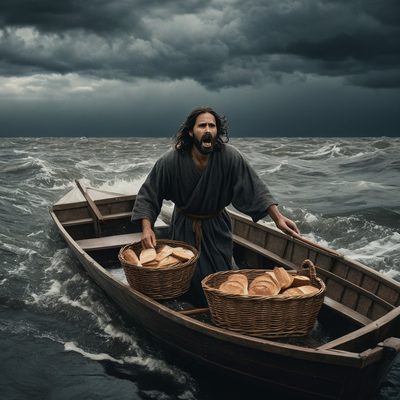
After feeding five thousand people with five loaves and two fish, Jesus walked on water to the disciples' boat in a storm. They were terrified. The text says, "They had not understood about the loaves; their hearts were hardened." Mark explicitly connects their fear of Jesus walking on water to their failure to comprehend what had just happened with the bread. The miracle they had just witnessed and participated in should have reframed everything that came next.
Scripture: Mark 6:52
Lesson: Spiritual experiences do not automatically produce spiritual understanding. The disciples had watched Jesus multiply food for five thousand people — they had distributed it themselves. And yet hours later they were terrified by another demonstration of the same power. We can be deeply involved in remarkable things and still fail to let them change our operating assumptions for the next crisis.
103. The People Want to Make Jesus King by Force
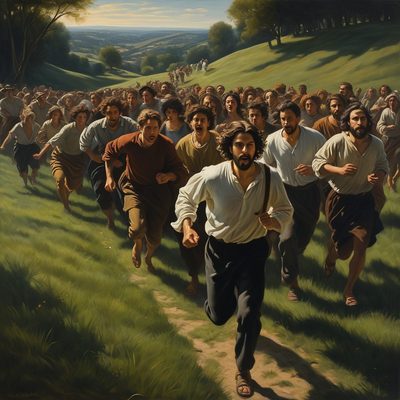
After Jesus fed five thousand people, the crowd began to say, "Surely this is the Prophet who is to come into the world." Jesus, knowing they intended to come and make him king by force, withdrew again to a mountain by himself. The crowd wanted a king who would solve their food problem. They had experienced one miracle and immediately built a political program around it.
Scripture: John 6:14–15
Lesson: The crowd was not wrong to want a king — they were wrong about what kind of king they wanted and what they wanted him for. They wanted the bread to keep coming. Jesus knew that the king they were imagining would not address what they actually needed. We frequently try to get Jesus to endorse the agenda we already have rather than aligning ourselves with his. He tends to quietly withdraw from those invitations.

104. The Rich Man and Lazarus
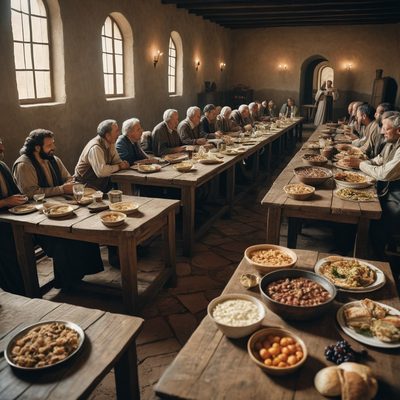
Jesus told a parable about a rich man who was dressed in purple and fine linen, eating sumptuously every day. At his gate lay a beggar named Lazarus, covered in sores, longing to eat what fell from the rich man's table. Both died. Lazarus went to Abraham's side; the rich man went to torment. In his anguish the rich man called to Abraham to send Lazarus to warn his brothers. Abraham said they already had Moses and the Prophets — if they did not listen to them, they would not be persuaded even by someone rising from the dead.
Scripture: Luke 16:19–31
Lesson: The rich man's sin was not dramatic cruelty — he did not drive Lazarus away or abuse him. He simply walked past him every day and never let Lazarus become real to him. The suffering that is near us, visible to us, and consistently ignored becomes invisible through repetition. The man at the gate who needed food while the man inside ate sumptuously is one of the most quietly damning pictures of proximity without compassion in the Bible.

105. Agrippa Is Almost Persuaded
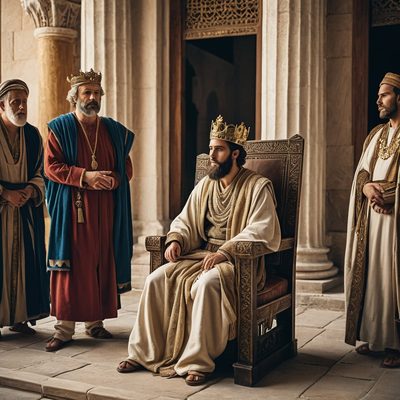
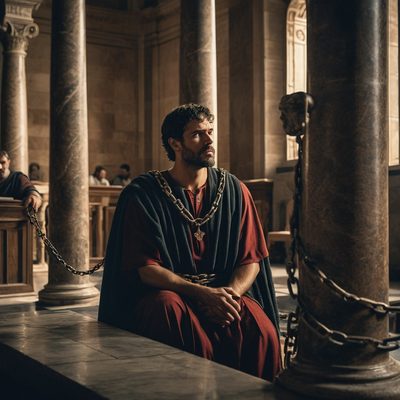
After Paul's defense before King Agrippa, Agrippa said to Paul: "Do you think that in such a short time you can persuade me to be a Christian?" Paul answered: "Short time or long — I pray to God that not only you but all who are listening to me today may become what I am." Agrippa stood up and said to Festus: "This man could have been set free if he had not appealed to Caesar."
Scripture: Acts 26:28–32
Lesson: Agrippa acknowledged Paul's case was compelling. He saw no crime. He might have been "almost persuaded." And he walked out. The almost-persuaded position is not a stable one — it combines enough understanding to be responsible for the decision with enough resistance to keep postponing it. The question Paul implicitly raised was what Agrippa was waiting for.
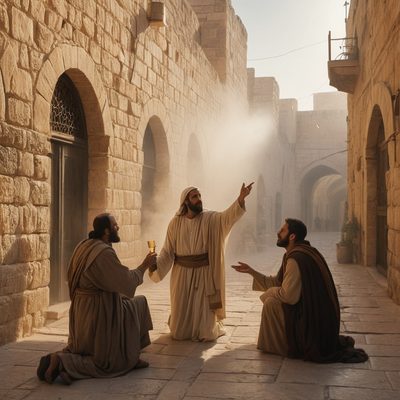
106. Disciples Wonder Who Sinned for the Blind Man
When Jesus and his disciples passed a man who had been blind from birth, the disciples asked: "Rabbi, who sinned, this man or his parents, that he was born blind?" Jesus said, "Neither this man nor his parents sinned, but this happened so that the works of God might be displayed in him." Then he healed the man. The disciples had spent their question on finding someone to blame, while the purpose of the situation was entirely different.
Scripture: John 9:1–7
Lesson: The disciples' question was not malicious — it reflected their sincere theological framework for why suffering happened. But the framework was wrong, and it oriented them toward blame rather than toward response. When we encounter someone's pain or difficulty, the impulse to diagnose its cause — to figure out whose fault it is — can delay or prevent us from doing the only actually useful thing: helping.
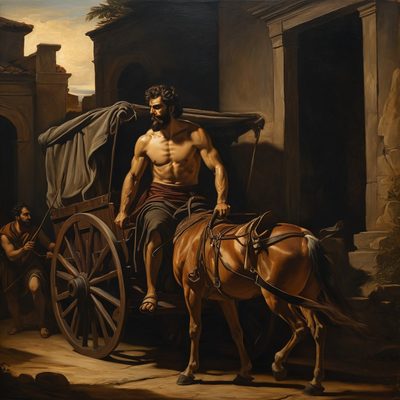
107. Naaman Is Offended by Simple Instructions
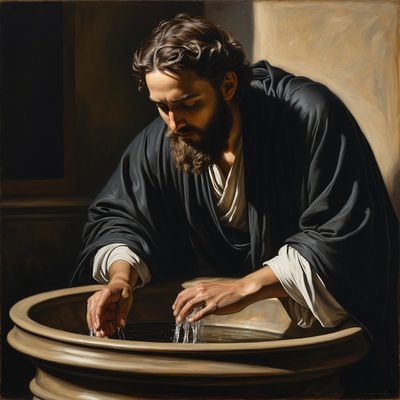
The commander of the Aramean army came to Elisha with horses and chariots and a letter from the king. He expected Elisha to come out, wave his hand over the leprosy, and call on the name of his God. Instead, Elisha sent a messenger to tell him to go wash in the Jordan River seven times. Naaman was furious. "Are not Abana and Pharpar, the rivers of Damascus, better than all the waters of Israel?" He almost went home without being healed.
Scripture: 2 Kings 5:9–14
Lesson: Naaman had a detailed expectation of how his healing should look. When the process looked simpler, less ceremonial, and less dignified than he imagined, he rejected it. His servants pointed out gently that if the prophet had told him to do something hard, he would have done it — why not something simple? We frequently resist the ordinary and unglamorous version of what we need because we were expecting something impressive.

108. Ham Uncovers His Father's Nakedness
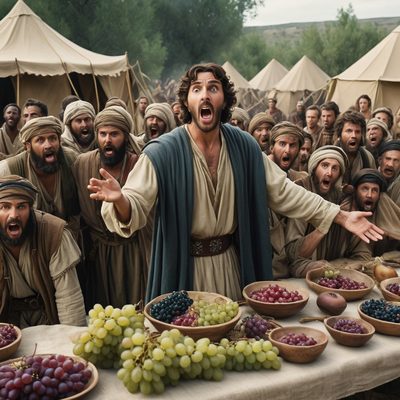
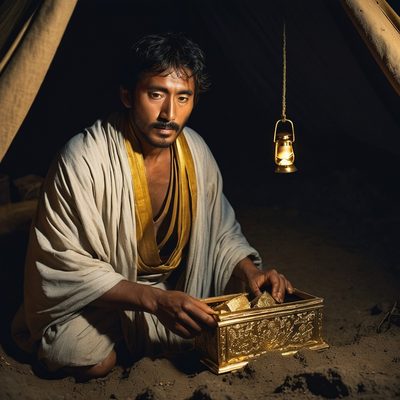
After the flood, Noah planted a vineyard, made wine, drank too much, and lay uncovered in his tent. Ham — the father of Canaan — saw his father's nakedness and went and told his brothers outside. Shem and Japheth took a garment, walked in backward, and covered their father without looking at him. When Noah awoke and found out what Ham had done, he cursed Canaan.
Scripture: Genesis 9:20–25
Lesson: Ham saw something embarrassing about his father and immediately publicized it to his brothers. Shem and Japheth's response was the opposite — they covered what they had been told about without looking. This contrast is one of scripture's clearest pictures of how to handle a leader's or parent's failure: covering and restoring private dignity versus exposing and spreading the embarrassing detail. The impulse to tell others what is wrong with someone who has authority over us rarely produces anything good.

109. Noah Gets Drunk After the Flood
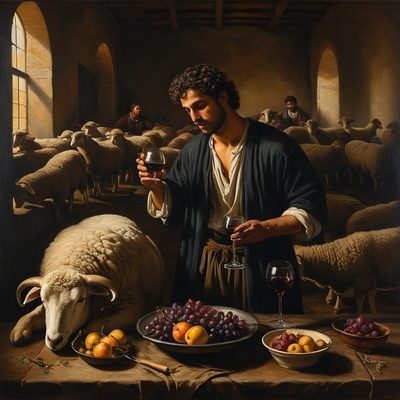
Noah had survived the flood, built an altar, received God's covenant and the rainbow. Then he planted a vineyard, made wine, and drank himself into unconsciousness in his tent. The man who had faithfully built an ark through decades of probable ridicule lost his dignity in a vineyard. His failure gave Ham an opportunity that produced generational consequences.
Scripture: Genesis 9:20–21
Lesson: Intense sustained faithfulness followed by relief and achievement creates a particular vulnerability. The ark was built; the water had receded; the covenant was sealed. Noah planted something new. And then he drank too much. The period after a major achievement or a sustained season of difficulty is not the time to relax our vigilance — it is often the time when we are least protected.

110. Lot's Wife Looks Back
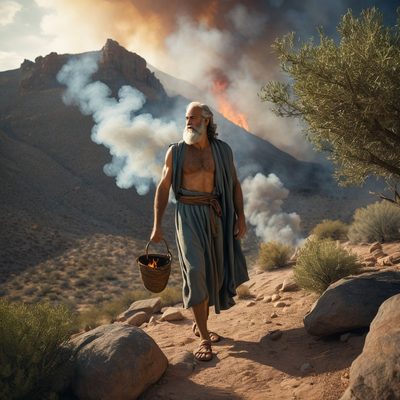
As Lot's family fled Sodom before its destruction, the angels said specifically: "Flee for your lives! Don't look back, and don't stop anywhere in the plain! Flee to the mountains or you will be swept away!" Lot's wife looked back, and she became a pillar of salt. Jesus later referenced her when warning his disciples about clinging to what they are being asked to leave behind.
Scripture: Genesis 19:17, 26; Luke 17:32
Lesson: "Remember Lot's wife" is one of Jesus's shortest sermons. The temptation to look back at what we have been called to leave — not just to glance but to linger, to go back mentally even as we move forward physically — is real and recurring. The instruction to not look back is not arbitrary; it is a test of whether you have actually left. Partial departure, with your heart still turned toward what you were called away from, is not departure.
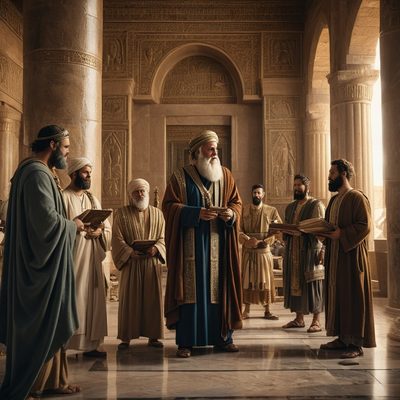
111. Hezekiah Prays for More Years, Then Wastes Them
When Hezekiah was told he would die of his illness, he turned to the wall and prayed through tears. God told Isaiah to go back and tell him he would have fifteen more years. Those fifteen years produced the visit from Babylon he handled so poorly — and, Hezekiah acknowledged, his son Manasseh, who became one of Judah's worst kings. Hezekiah's response to learning this — "there will be peace and security in my lifetime" — is one of the most candid moments of self-interest in scripture.
Scripture: 2 Kings 20:1–21; 2 Kings 21:1
Lesson: Hezekiah prayed desperately for more time and received it. The years he gained turned out to contain his worst decisions and his worst successor. The thing we beg God for most urgently is not always the thing that is best for us or the people who come after us. The answered prayer that extends our timeline sometimes extends our opportunity to do damage as much as good.
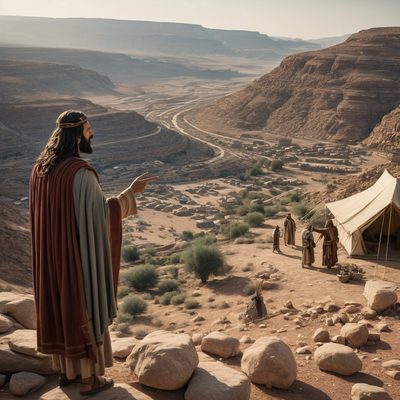
112. Balaam Loves the Wages of Wickedness
Balaam was a genuine prophet — God spoke to him, he heard accurately, and when he opened his mouth to curse Israel, blessings came out instead. But the New Testament describes what Balaam actually wanted: he loved the wages of wickedness. He could not curse Israel, so he advised Balak to get the Israelites to intermarry with Moabite women and compromise themselves — which worked. He found a way to help Balak harm Israel without actually cursing them.
Scripture: Numbers 22–24; 2 Peter 2:15; Revelation 2:14
Lesson: Balaam is the case of a person with genuine spiritual gifts and access, whose motivations were corrupt. He could not be bought to speak falsely — his prophetic gift was too real for that. So instead he found a workaround: counsel that accomplished what the bribe was meant to purchase, while keeping his hands technically clean. Spiritual capability and spiritual integrity are not the same thing.
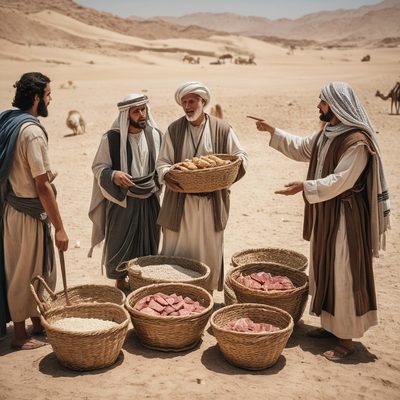
113. The Israelites Complain About Manna
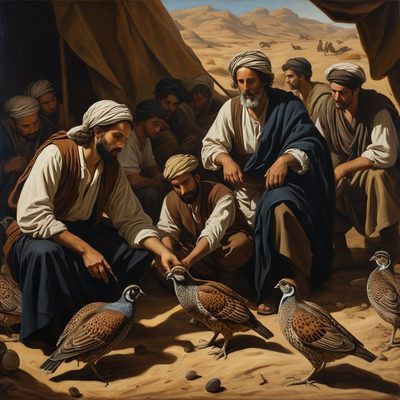
The Israelites had been eating manna for months in the wilderness. It appeared every morning, could be ground and baked into bread, and sustained the whole nation. They began to despise it. "We are disgusted with this miserable food!" They remembered Egypt's fish, cucumbers, melons, leeks, onions, and garlic. God sent quail until it was coming out of their nostrils. His anger burned because they had despised the provision he had sustained them with daily.
Scripture: Numbers 11:4–20
Lesson: Manna was miraculous — supernaturally provided, never absent, nutritionally sufficient. The problem was that it was monotonous. The people compared what God was giving them to what the world had given them and found God's provision inferior. It is possible to receive genuine, consistent, life-sustaining care from God and still be miserable about it because it does not match our preference for variety and self-determination.
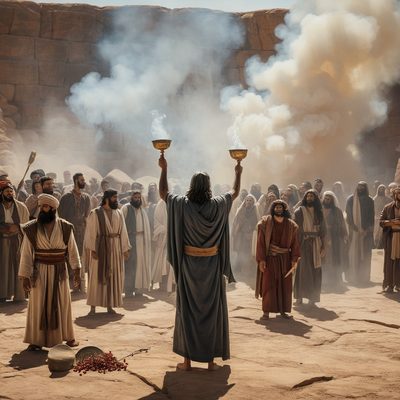
114. Korah Questions Moses's Authority
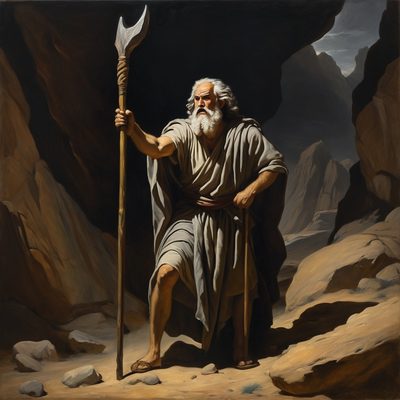
Korah gathered two hundred fifty leaders of the community — "well-known community leaders who had been appointed members of the council" — and rose up against Moses and Aaron. "You have gone too far! The whole community is holy, every one of them, and the Lord is with them. Why then do you set yourselves above the Lord's assembly?" Moses fell facedown. God proposed a test: each man would bring his censer and God would show who was holy.
Scripture: Numbers 16:1–11
Lesson: Korah's complaint was dressed in the language of equality and fairness — "everyone is holy, not just you two." It sounds democratic and appealing. But the real issue was that Korah wanted the position Moses and Aaron held. His theological framing — "the whole community is holy" — was technically correct and completely misapplied. Sound arguments can be constructed in service of personal ambition. The language of justice and equality can be borrowed to pursue personal advancement.

115. The Israelites Worship the Golden Calf
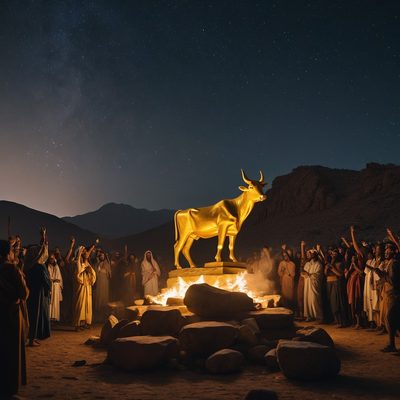
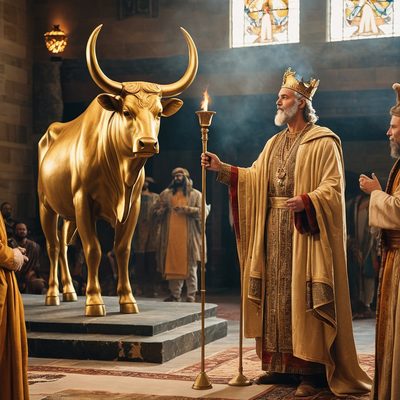
While Moses received the Ten Commandments on Mount Sinai — including the command to have no other gods — the people at the base of the mountain were building the golden calf and saying, "These are your gods, Israel, who brought you up out of Egypt." The distance between the mountain where the law was being given and the valley where it was being violated was measurable in geography. The time between Exodus and idolatry was weeks.
Scripture: Exodus 32:1–10
Lesson: The speed of the Israelites' return to idolatry after their miraculous deliverance is alarming and instructive. They had crossed the Red Sea on dry ground. They had watched the Egyptian army drown. They had seen water come from a rock. Within weeks they needed something they could see and touch. The desire for a tangible, manageable, visible representation of the divine is persistent. Genuine encounter with God does not automatically immunize us against the appeal of a substitute.
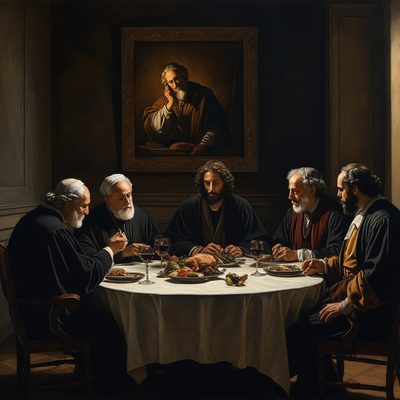
116. Peter's Inconsistency at Antioch
In Antioch, before certain people came from Jerusalem, Peter was eating with Gentile believers. When they arrived, he began to draw back and separate himself from the Gentiles, fearing the circumcision group. He knew better — he had received the vision of clean and unclean foods, had entered Cornelius's house, had defended Gentile believers at the Jerusalem council. But in person, with the Jerusalem group watching, he changed his behavior.
Scripture: Galatians 2:11–14
Lesson: Peter did not need more theological education. He needed to live what he already knew when the social cost was present. The gap between what we believe privately and what we practice publicly, particularly when a specific audience is watching, is one of the defining integrity challenges for any person of faith. The people we are afraid of tend to have more influence over our behavior than the convictions we hold.

117. Hymenaeus and Alexander Shipwreck Their Faith
Paul mentions two men by name: Hymenaeus and Alexander, who had rejected faith and a good conscience and "suffered shipwreck with regard to the faith." Elsewhere Hymenaeus is mentioned as saying the resurrection had already taken place, which destroyed the faith of some. They had not drifted or gradually faded — they had actively rejected something they once held.
Scripture: 1 Timothy 1:19–20; 2 Timothy 2:17–18
Lesson: The combination Paul identifies — rejecting faith and a good conscience — is instructive. The shipwreck of faith and the abandonment of conscience tend to go together. When we begin making choices that violate our conscience and stop dealing with the damage that causes, we tend to eventually revise our beliefs to match our behavior rather than revising our behavior to match our beliefs. The conscience is the early warning system. Ignoring it long enough changes what we believe.

118. Jehoshaphat Repeats His Alliance Error
Even after being rebuked by the prophet for his alliance with Ahab, Jehoshaphat made another commercial alliance — this time with Ahab's son Ahaziah. They built a fleet of trading ships together. The prophet Eliezer told Jehoshaphat the ships would be destroyed because of his alliance with Ahaziah. The ships were wrecked. Then Jehoshaphat refused to let Ahaziah's men join the next venture — but only after the first one had already failed.
Scripture: 2 Chronicles 20:35–37; 1 Kings 22:49
Lesson: Jehoshaphat was corrected once, backed away, and then made the same category of error again with a different partner from the same family. He applied the lesson after the second failure. Some learning only happens through repeated experience of the same consequence, which is frustrating but true. The goal is to apply lessons the first time they are taught rather than waiting for the second failure.
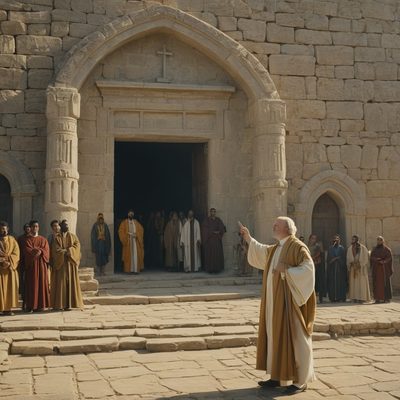
119. Diotrephes Refuses to Welcome Fellow Believers
The apostle John wrote that Diotrephes, who loved to be first, would not welcome them. Not only that — he also refused to welcome other brothers and sisters in Christ, stopped those who wanted to do so, and put them out of the church. He spread malicious nonsense about John. The language suggests a local church leader who used his position as a gatekeeper to exclude people whose presence threatened his primacy.
Scripture: 3 John 9–10
Lesson: Diotrephes did not reject the gospel; he rejected people. His gatekeeping was personal, not theological. The use of religious authority to exclude people who threaten your position — rather than to protect the community from genuine harm — is one of the ways power corrupts in ministry contexts. The motivation beneath the action matters enormously.

120. The Disciples Ask Jesus to Send the Children Away
People were bringing little children to Jesus for him to place his hands on them. The disciples rebuked them. Jesus was indignant and said, "Let the little children come to me, and do not hinder them, for the kingdom of God belongs to such as these." The disciples thought they were managing Jesus's time efficiently. They had decided, on his behalf, that children were not a priority.
Scripture: Mark 10:13–16
Lesson: The disciples filtered the access of those who seemed least important. Children had no status, no resources, and no obvious contribution to the mission as they understood it. The people whose access we restrict — the ones we decide are not worth the time of those we are protecting — reveal our assumptions about what and who matters. Jesus's indignation is one of the rare emotional responses explicitly noted in the gospels. He took the children seriously. The disciples had not.