1. Face of the Shroud: Positive, Negative & 3D
Use the buttons below to switch optical inspection modes.
Examine the facial negative transformation, VP-8 3D depth topography, and explore forensic wound sites mapped directly from STURP research.
Use the buttons below to switch optical inspection modes.
Drag the central golden handle left and right to peel away the natural linen image (left) and reveal the photographic negative (right).
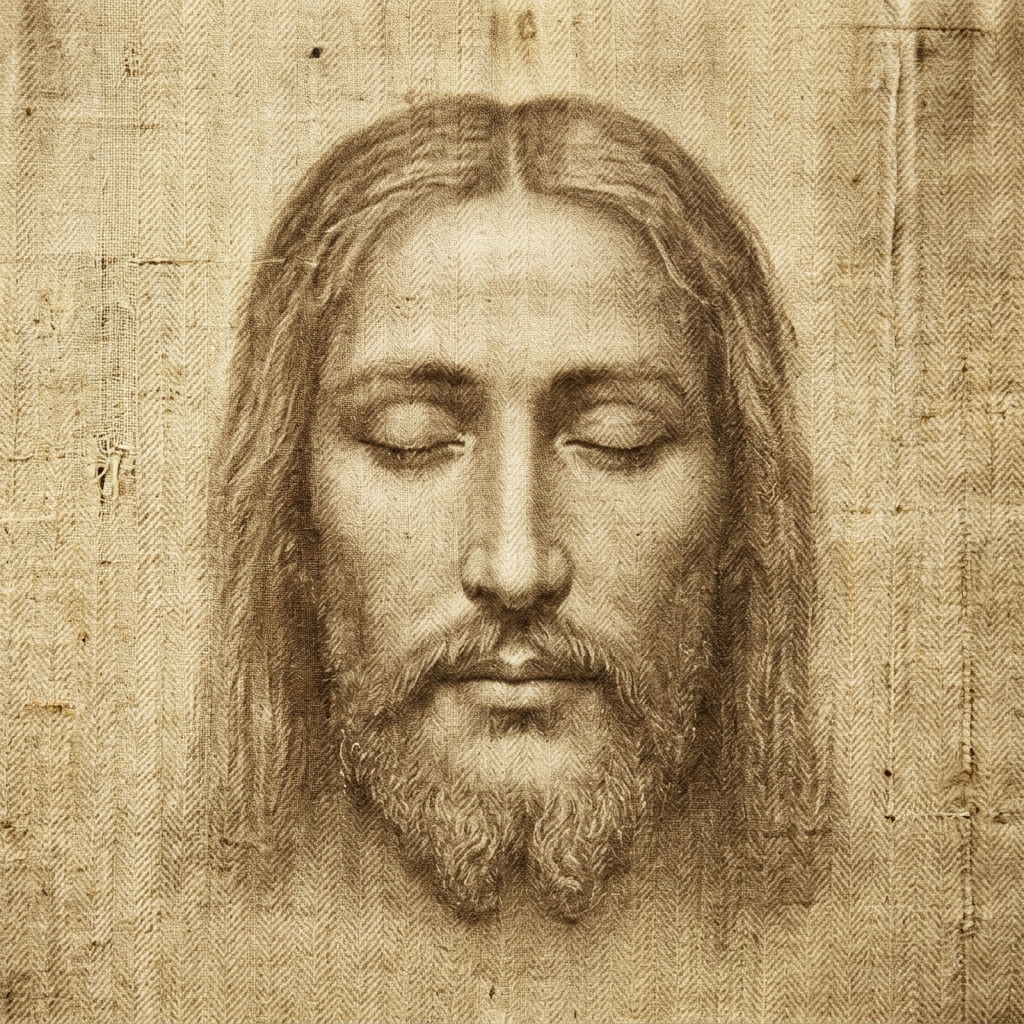 Photo Negative (1898)
Natural Linen View
Photo Negative (1898)
Natural Linen View
Notice how the faint, flat silhouette on the linen turns into a deeply dimensional, serene, and majestic human face with lifelike shadows and highlights on the negative.
Click the pulsating crimson pins on the cloth below to view detailed clinical findings and forensic autopsy correlations.
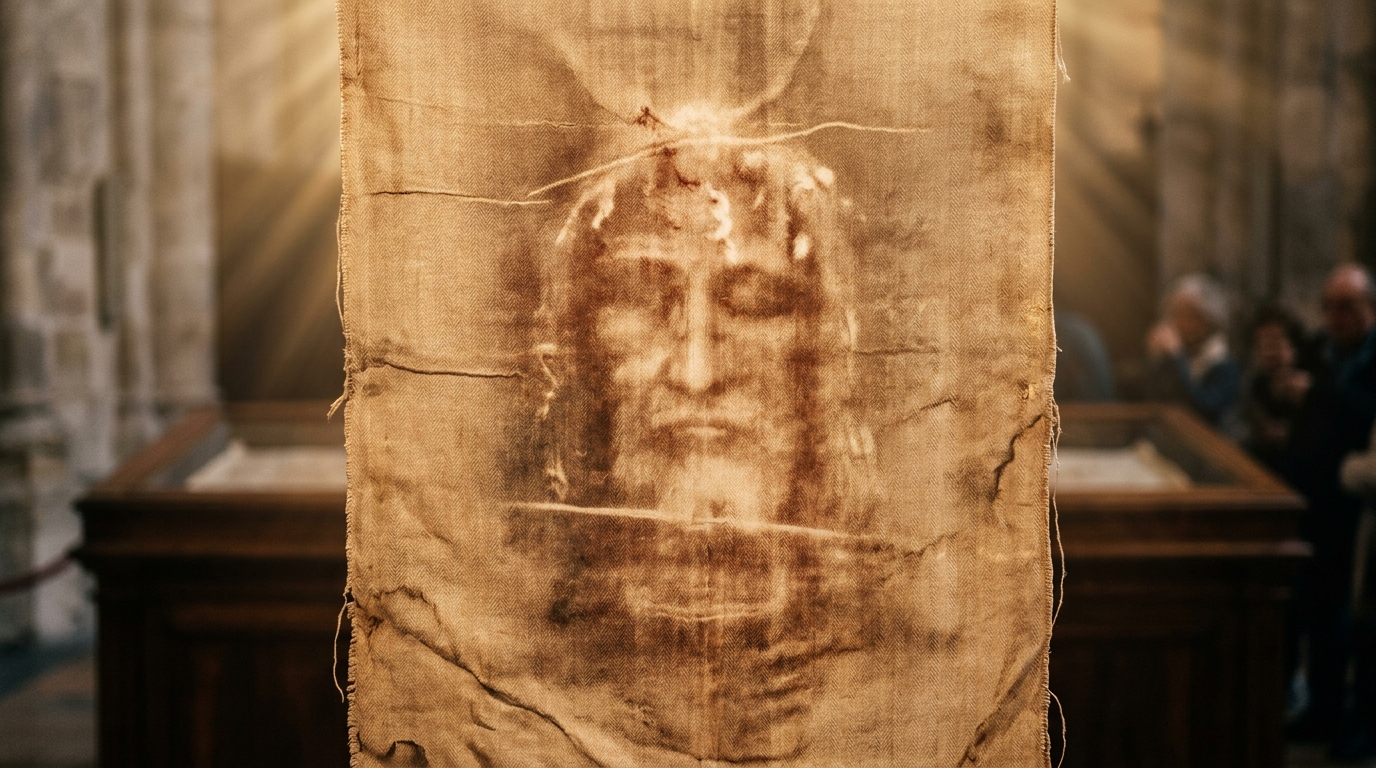
Swollen right cheek, deviation of the nasal cartilage consistent with a violent blow from a club or rod, lacerations along the eyebrow and forehead, swollen lip, swollen eye.
John 19:3 - "And they struck him with their hands."
Maxillofacial surgeons note realistic soft tissue swelling and hematoma formation that defies artistic stylization.
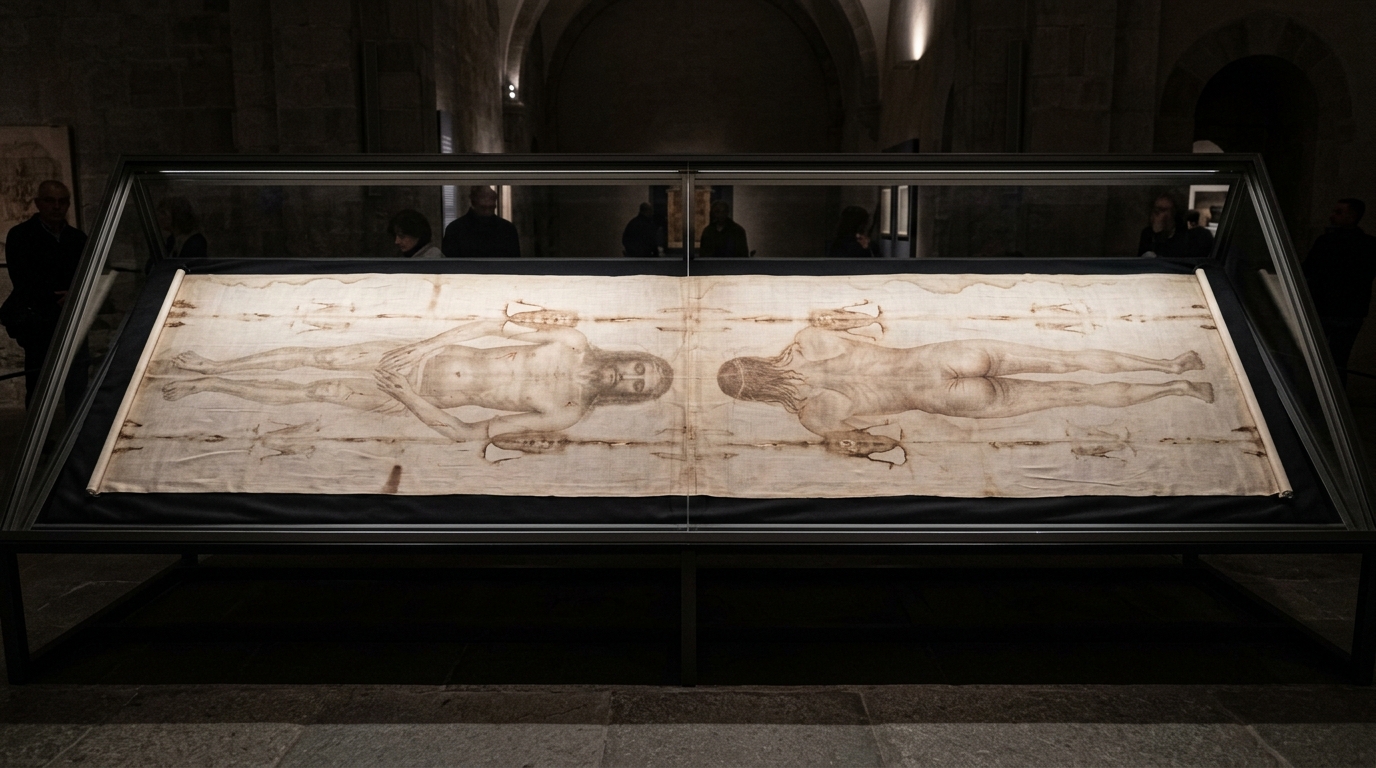
Measuring 4.4 meters long by 1.1 meters wide (14 ft 5 in × 3 ft 7 in), the Shroud bears two head-to-head impressions: the frontal view on the left, and the dorsal (back) view on the right.