For centuries, the 14-foot linen cloth bearing the faint negative image of a tortured, crucified man was called a medieval painting. Today, physics, forensic hematology, botany, and X-ray crystallography have delivered their verdict: no artist made this.
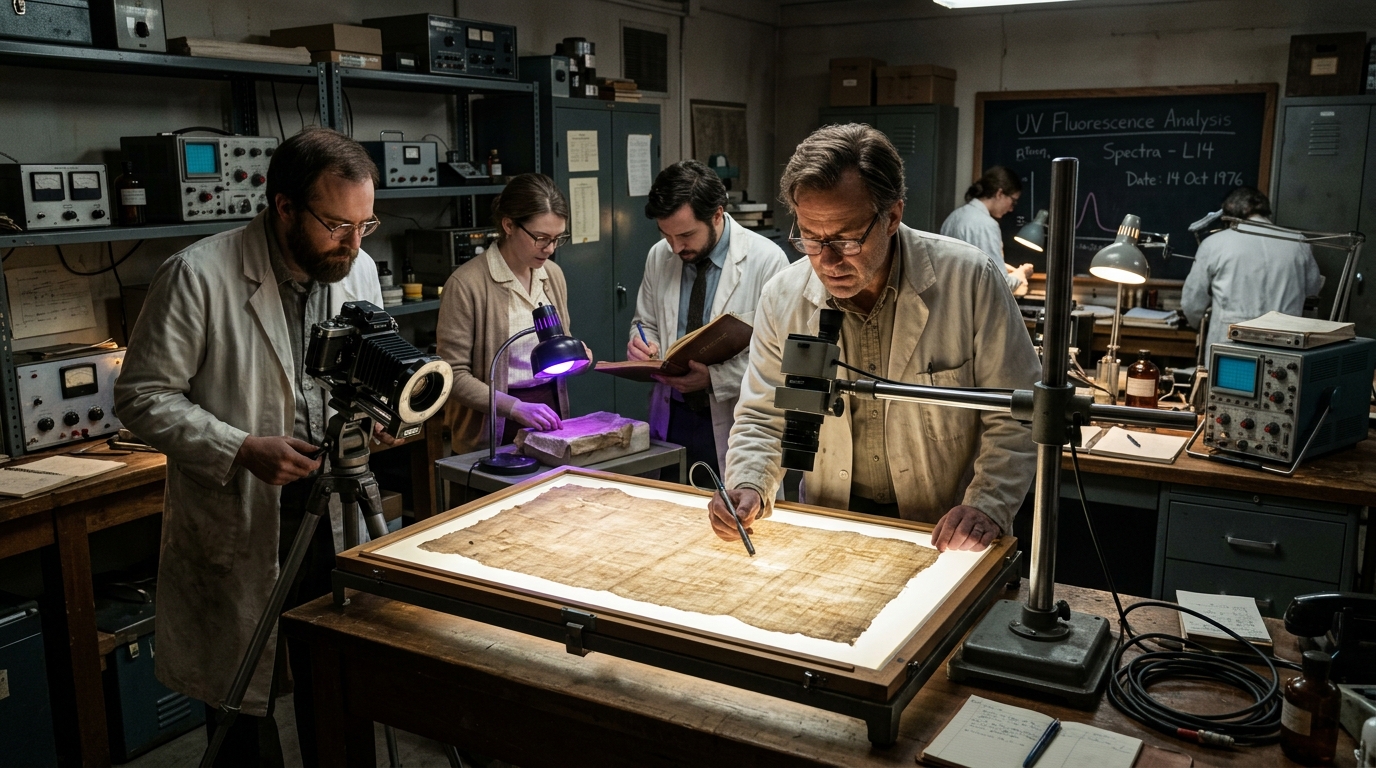
In 1978, the Shroud of Turin Research Project (STURP)—a team of 40 world-class scientists from Los Alamos, NASA, and the US Air Force—conducted 120 hours of non-destructive testing. Their conclusion shook the scientific world:
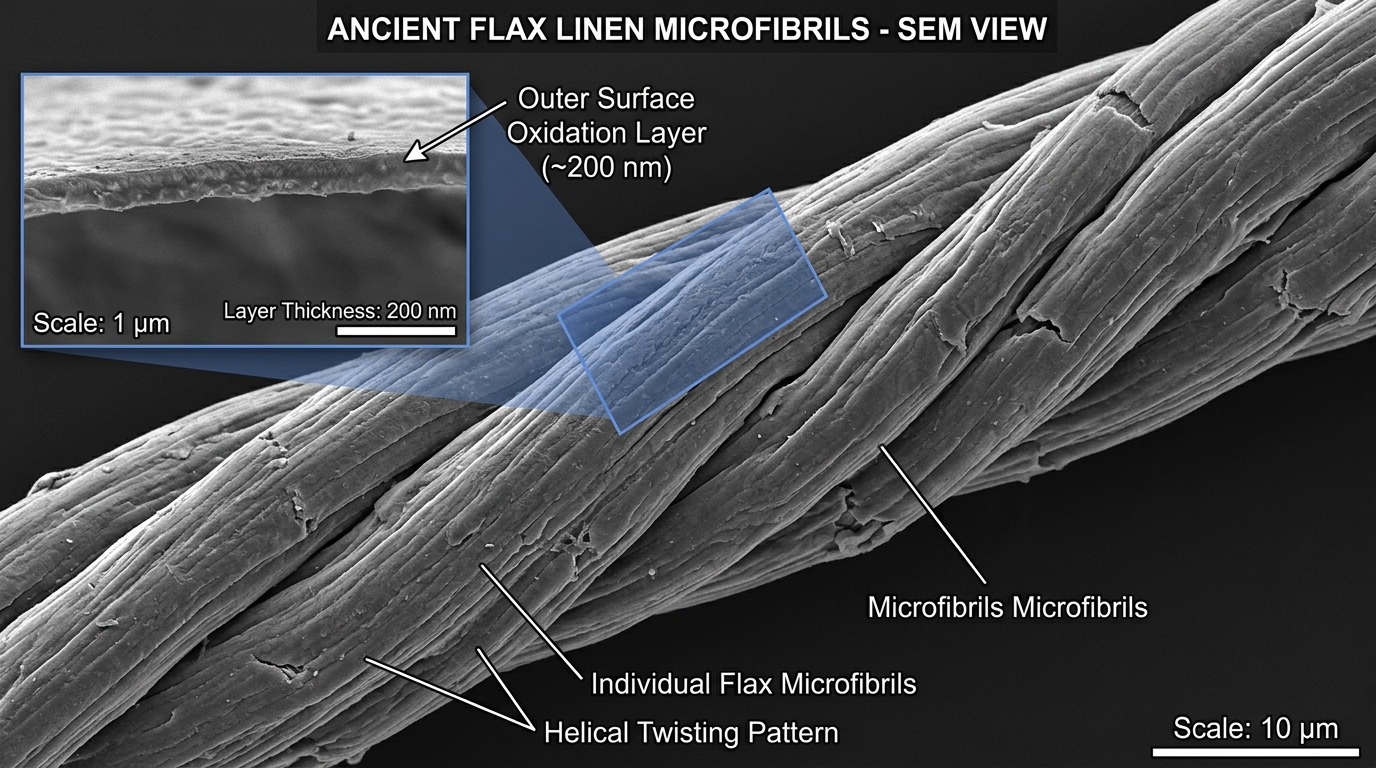
The image does not soak through the linen fibers. It exists only on the ultra-thin, outermost carbohydrate crown layer (200–500 nanometers thick). The inner core of the flax thread remains entirely pristine and white. No liquid paint or dye can do this.
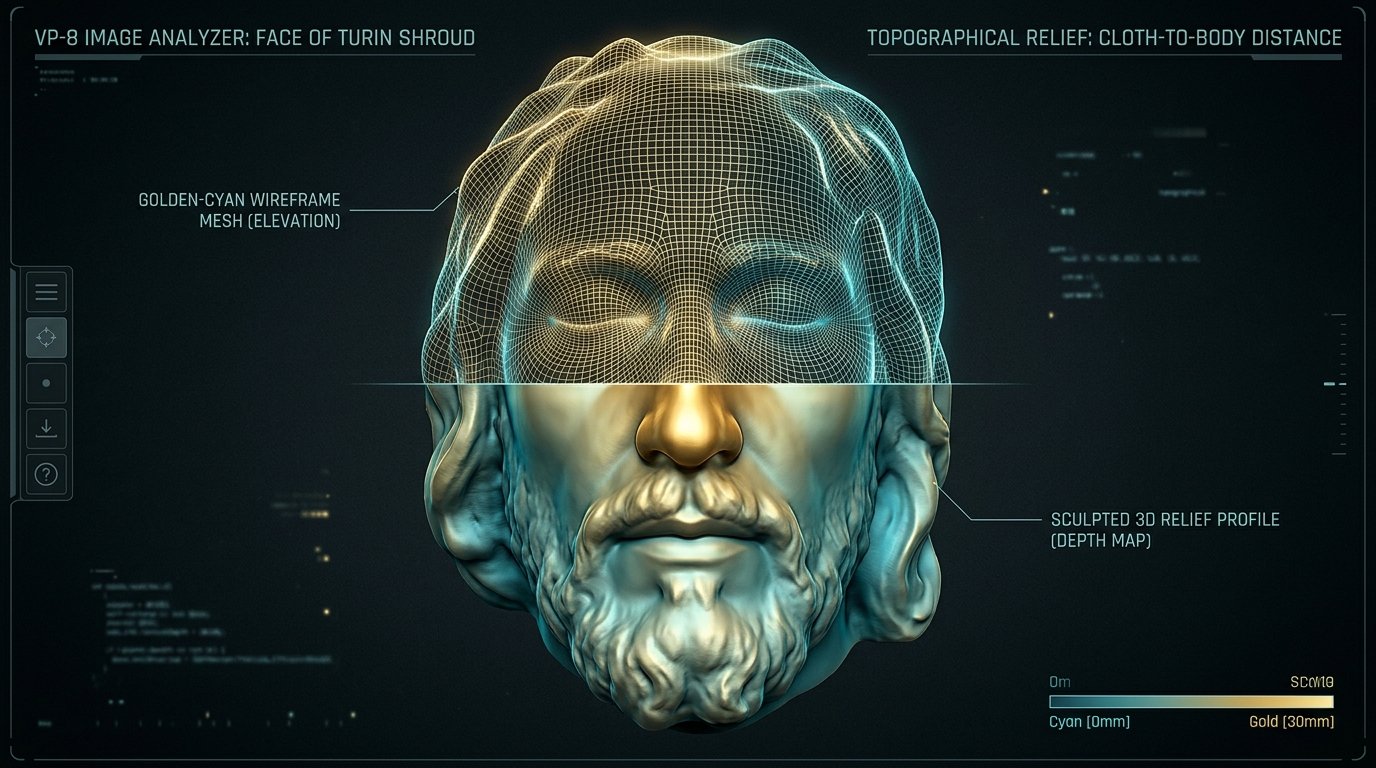
Normal photographs or portraits encode light and shade based on illumination and reflectances. When analyzed via a NASA VP-8 Image Analyzer, normal photos deform into twisted lumps. The Shroud produces an anatomically flawless 3D relief because its intensity encodes distance.
Proteolytic enzyme testing proved that the human blood transferred onto the cloth first. When the mysterious image-forming burst occurred later, it formed everywhere except underneath the blood clots. There is no image beneath the blood.
When Italian photographer Secondo Pia took the first photograph of the Shroud in May 1898, he nearly dropped his glass plate in shock: the image on the cloth is a natural photographic negative. What the naked eye sees as a faint, blurry silhouette transforms into a lifelike, majestic positive on a photographic plate.
In 1976, US Air Force Academy physicist John Jackson placed the image into a VP-8 Image Analyzer—an instrument used to convert planetary radar images into 3D topographical relief maps. To everyone's astonishment, the Shroud produced a mathematically precise, undistorted 3D human body.
Modern science does not examine the Shroud through blind faith, but through the convergent testimony of multiple independent empirical disciplines.
In 1976, NASA scientists John Jackson and Eric Jumper discovered that the Shroud image contains true three-dimensional topographic information. Normal photographs or paintings flatten or distort when placed in a VP-8 Image Analyzer; the Shroud creates a anatomically perfect 3D relief.
Read Detailed Analysis & Papers →
The 1978 STURP (Shroud of Turin Research Project) spent over 120 continuous hours running non-destructive physical and chemical tests. They proved definitively: there is zero paint, dye, pigment, brushstrokes, or binder. The image is an ultra-thin discoloration confined strictly to the topmost 200–500 nanometers of the linen microfibrils.
Read Detailed Analysis & Papers →
Biophysicists John Heller and Alan Adler proved the stains are real human blood—positive for hemoglobin, human albumin, bilirubin, and high serum. Strikingly, tests confirm the blood went onto the cloth FIRST; the image was subsequently formed around and between the clotted blood without affecting the cloth beneath.
Read Detailed Analysis & Papers →
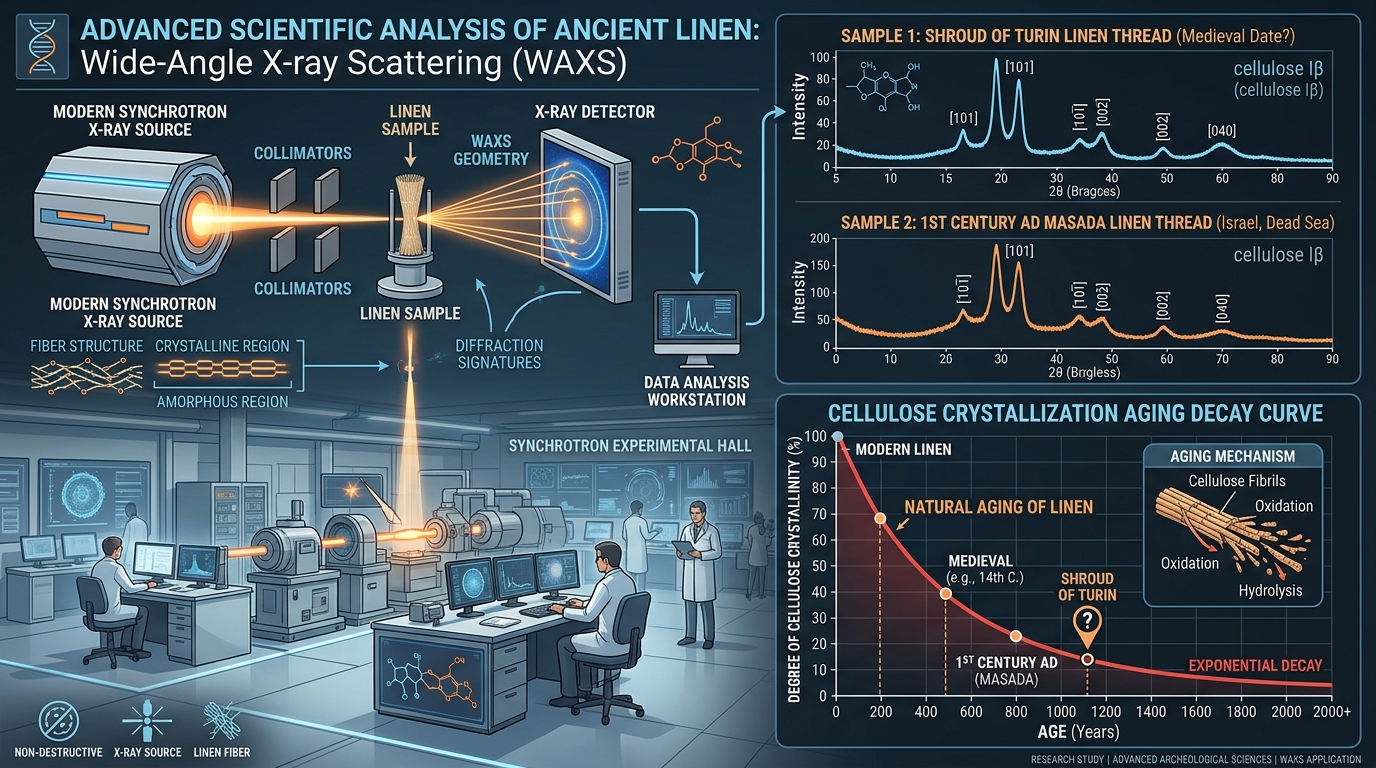
The infamous 1988 Carbon-14 test dating the Shroud to 1260–1390 was completely compromised. Los Alamos chemist Raymond Rogers proved in 2005 that the test sample came from a 16th-century invisible repair containing cotton and madder dye. In 2022, Italian crystallographer Dr. Liberato De Caro utilized Wide-Angle X-ray Scattering (WAXS) to date the linen cellulose directly to the 1st century AD.
Read Detailed Analysis & Papers →
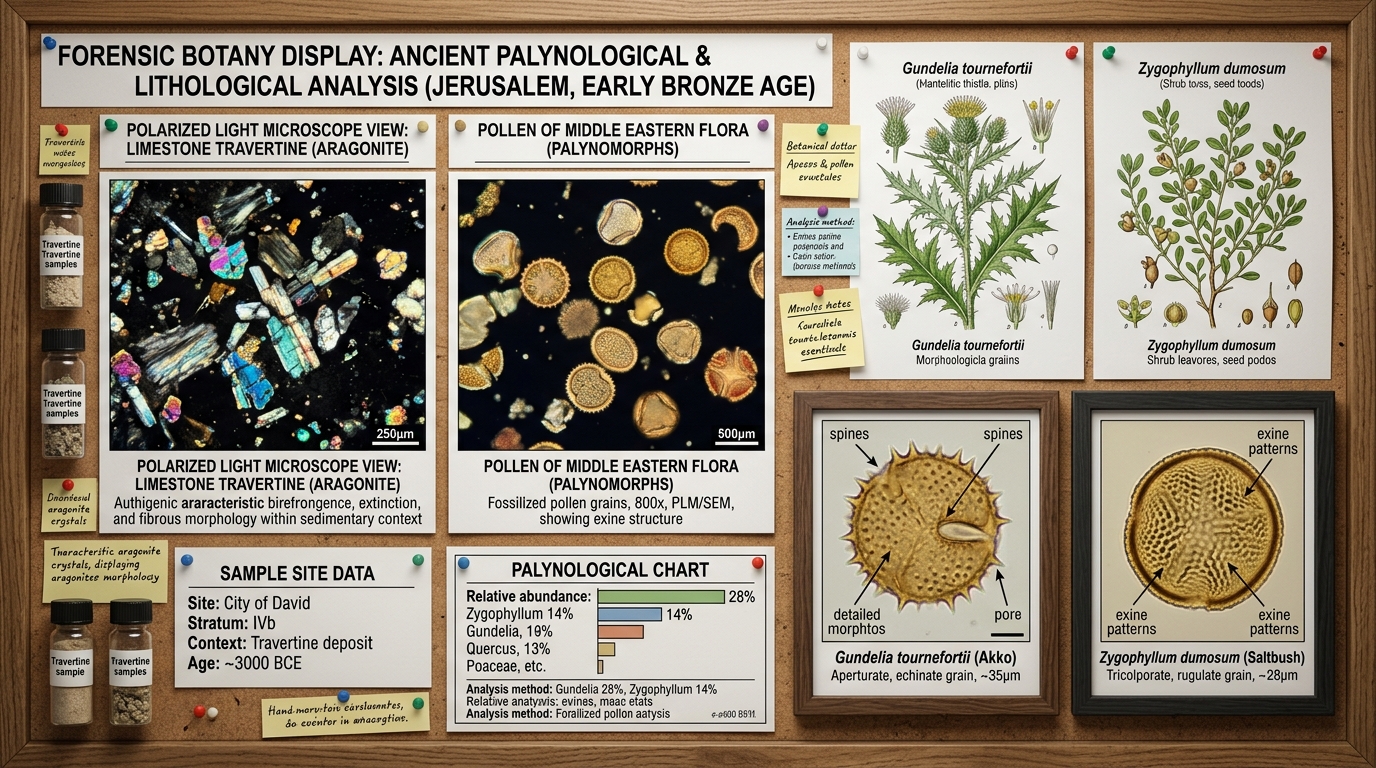
Swiss criminologist Dr. Max Frei and Hebrew University botanist Prof. Avinoam Danin identified over 58 distinct pollen types on the Shroud. A heavy concentration belongs to plants endemic only to the Judean desert and Jerusalem area during spring. Furthermore, microscopic limestone particles found on the feet, knees, and nose match the rare travertine aragonite of ancient Jerusalem tombs.
Read Detailed Analysis & Papers →
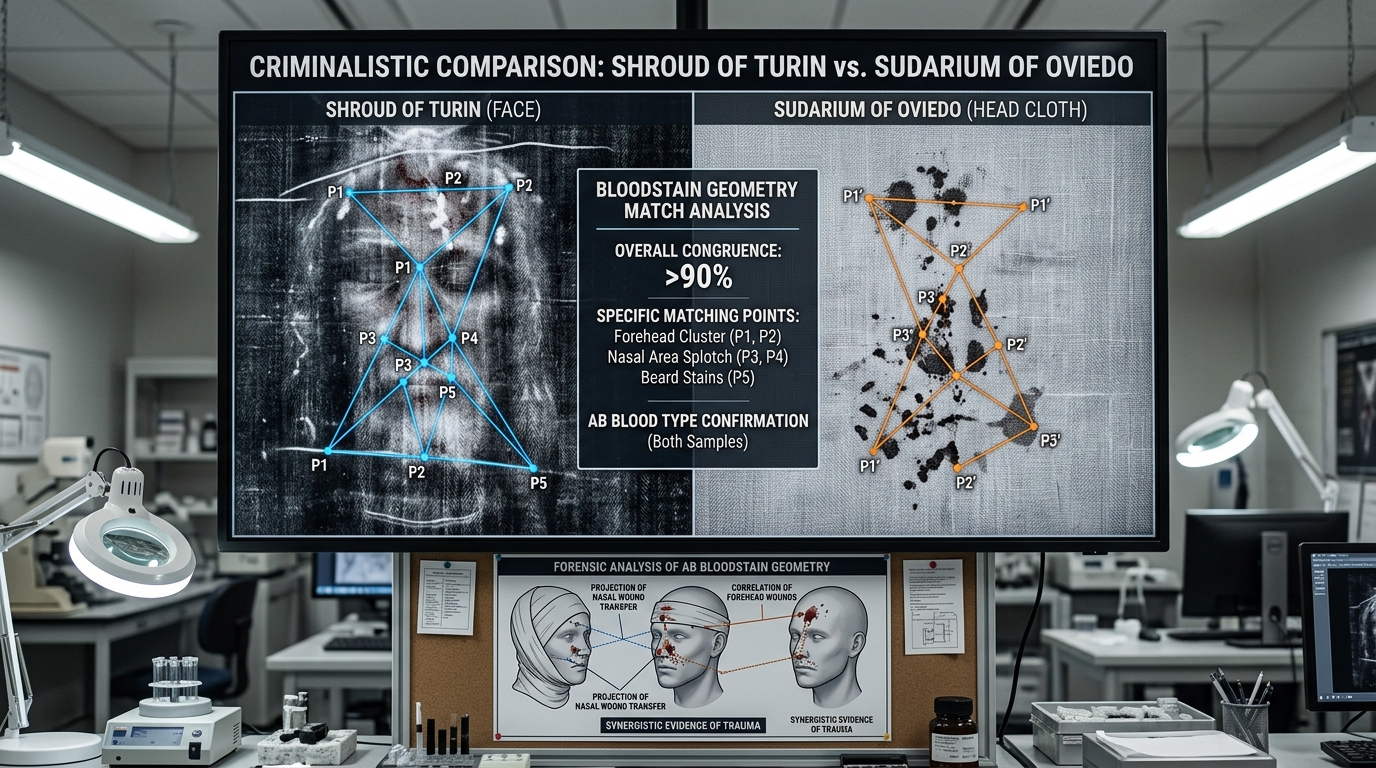
The Sudarium of Oviedo is an ancient face cloth kept in northern Spain with an unbroken documented provenance dating back to 614 AD—over 600 years BEFORE the 1988 C-14 medieval date. Criminalistic analysis demonstrates that both cloths wrapped the exact same human head immediately following death.
Read Detailed Analysis & Papers →In 1988, three laboratories dated a single corner clipping from the Shroud to 1260–1390 AD, leading global headlines to proclaim it a medieval fake. But what was hidden from the public?
In Oviedo, Spain lies the Sudarium—a linen face cloth documented in historical records dating back to 614 AD. Unlike the Shroud, the Sudarium has no body image, but contains heavy pulmonary edema fluid and traumatic bloodstains from the face of a crucified man.
When the Spanish Centre for Sindonology (EDICES) conducted digital criminalistic overlays of both cloths, the result was staggering:
Because the Sudarium's presence in Spain is documented 700 years before the 1988 C-14 date, its forensic match to the Shroud physically disproves the medieval forgery hypothesis.
Easy-to-understand explanations addressing the most common questions and skepticism.
No. While the 1988 test claimed a date range of 1260–1390, subsequent peer-reviewed investigations published in scientific journals (such as Thermochimica Acta by Los Alamos chemist Dr. Raymond Rogers) proved that the sample taken from the "Raes corner" was chemically unrepresentative of the main cloth. It contained modern cotton interwoven via an invisible French reweave and treated with gum and madder root dye to match the aged linen. When raw data from the 1988 labs was legally obtained in 2019, statistical analysis revealed massive discrepancies across the samples, violating metrological standards.
In 2022, Italian researchers led by Dr. Liberato De Caro at the CNR Institute of Crystallography used Wide-Angle X-ray Scattering (WAXS) to evaluate the natural molecular degradation of the cellulose crystalline structure in flax fibers. When compared against documented historical linens—from modern fabrics back to 1st-century AD linens from Masada and ancient Egyptian tombs—the Shroud linen precisely matched the 1st-century AD timeline (~2000 years old).
Chronologically impossible: the Shroud has documented historical exhibitions in Lirey, France, beginning in the 1350s—a full century before Leonardo da Vinci was even born (1452). Furthermore, STURP's exhaustive micro-chemical examination confirmed there are zero pigments, paints, dyes, brush strokes, or binders on the image fibers. The image resides strictly on the outermost 200 nanometers of the fiber crowns.
In a normal photograph or painting, light and dark areas represent reflected illumination, shadows, and color pigment. On the Shroud, luminance correlates mathematically to the physical distance between the cloth and the body (cloth-to-body distance). When processed through a VP-8 Image Analyzer, the Shroud generates a flawless three-dimensional human relief, whereas photos of human faces or paintings distort into grotesque flattened shapes.